University of Wisconsin–Whitewater Residence Hall

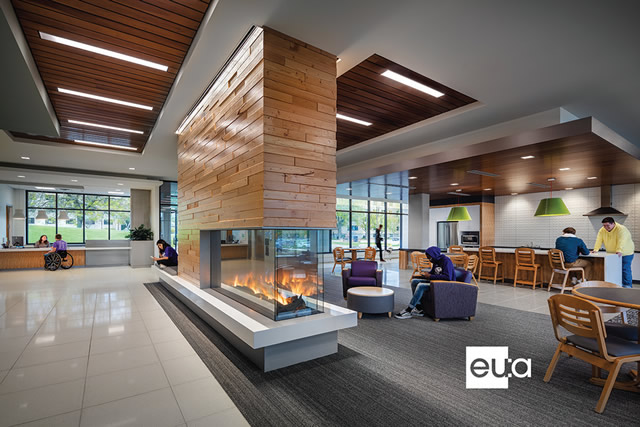
Architectural firm EUA worked with the state of Wisconsin and University of Wisconsin–Whitewater to design a residence hall for first-year students. The university’s Centers for Students with Disabilities played an integral role in the design phase to ensure the building was universally designed and accessible.
University of Wisconsin–Whitewater Residence Hall 

Photo © C&N Photography, LLC

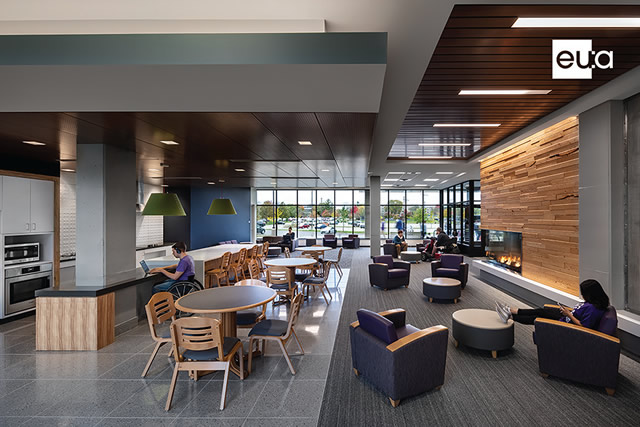
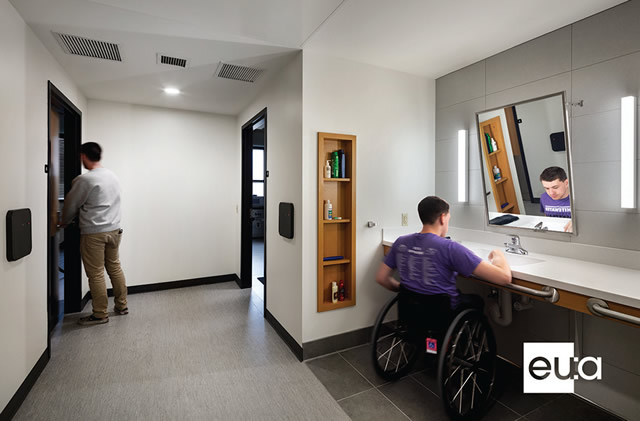
Universal design is an integral part of the University of Wisconsin-Whitewater’s culture. EUA’s in-house accessibility expert worked closely with campus representatives to provide an accessible environment that goes beyond code minimums to create integrated, inclusive spaces for students of all abilities. Enhanced accessible rooms allow for people that have additional disabilities to have a caretaker live in with them so that they can still live in an environment with other students.
University of Wisconsin–Whitewater Residence Hall 

Photo © C&N Photography, LLC

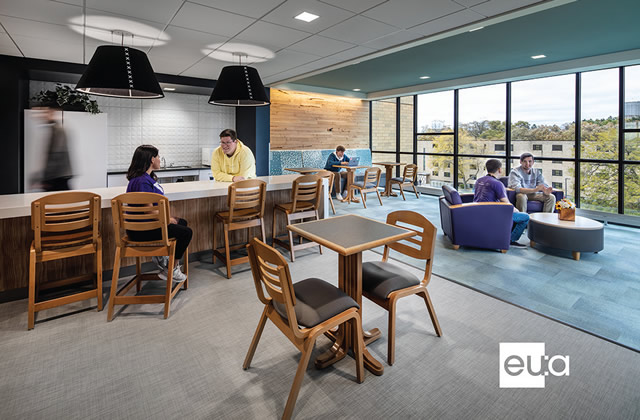
The five-story, 400-student residence hall consists of housing areas arranged in pods. The pod arrangement contains two double-occupant bedrooms and a bathroom accessed from a shared entry space. This provides students with an option for more privacy than the other traditional dorms on campus that have centralized multi-occupant bathrooms.
University of Wisconsin–Whitewater Residence Hall 

Photo © C&N Photography, LLC

Each floor also has a communal kitchenette with refrigerator and microwave. Upper floors include centralized lounge spaces that support the formation of community. The first floor includes a computer lab, study and multipurpose rooms, a full kitchen and laundry room, along with a front desk and lobby area. These common areas encourage students to get out of their rooms, help with social development and connect with other students.
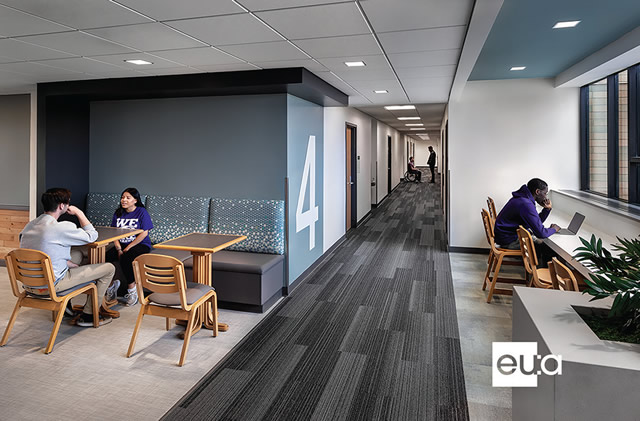
University of Wisconsin–Whitewater Residence Hall 

Photo © C&N Photography, LLC

University of Wisconsin–Whitewater Residence Hall 

Photo © C&N Photography, LLC

This article originally appeared in the March/April 2020 issue of Spaces4Learning.

Featured

  • Round Rock ISD Completes New Early College High School

    Round Rock ISD near Austin, Texas, recently announced that construction is complete on a new, 46,500-square-foot campus for Early College High School, according to a news release. The new facility will allow the school’s students and staff to move from portables into a permanent building and increase its enrollment to 500.

  • Houston-Area High School Breaks Ground on 117,000SF Multi-Use Facility

    North Shore Senior High School, part of Galena Park ISD in Houston, Texas, recently broke ground on a new multi-use facility for student extracurriculars, according to a news release. The North Shore Multi-Use Facility will include dedicated practice and training space for the school’s athletics and fine arts programs.

  • Harvard Announces Replacement Facility for Native American Program

    Harvard University in Cambridge, Mass., recently announced that construction will begin this spring on a new home for its Native American Program, according to university news. The 6,500-square-foot, all-electric building will stand three stories and serve as the central hub for the Harvard University Native American Program (HUNAP).

  • California K–12 District Finishes Renovations on Multi-Sport Stadium

    The Alameda Unified School District (AUSD) in Alameda, Calif., recently announced the completion of a renovation project on the Encinal Jr. & Sr. High School stadium, according to a news release. The district partnered with Quattrocchi Kwok Architects (QKA) and Bothman Construction on the facility, and funding came from Bond Measure B.