Smoking Detection Company Offers Product that Monitors for Tobacco, Marijuana Smoking

FreshAir, a smoking detection company, announced a new product that detects tobacco and marijuana smoking. The FreshAir1 Smoking Detection System is capable of monitoring up to 500 square feet and is suited for educational facilities to enforce no-smoking policies.
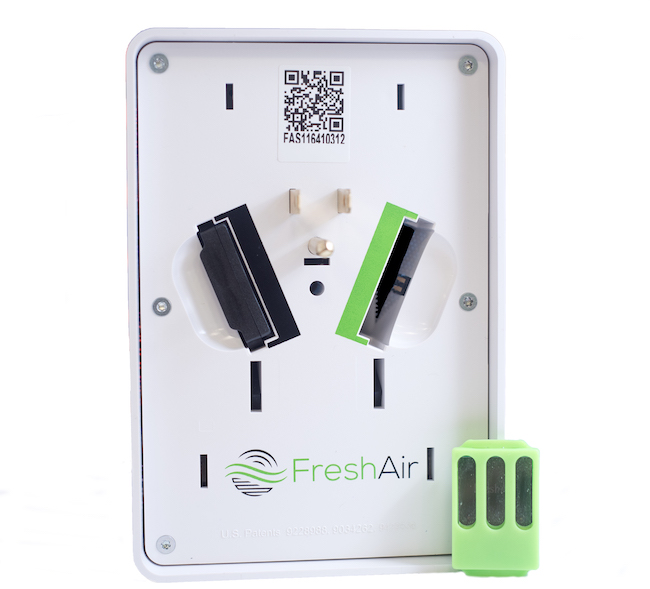
The FreshAir1 Smoking Detection System detects tobacco and marijuana smoking.

The FreshAir system sensors are “capable of detecting specific molecules in tobacco smoke and marijuana smoke,” according to a press release. Typical smoke detectors use light or radiation to detect general particles.

The devices can be plugged into standard outlets and are secured with tamper-proof screws. The devices are Wi-Fi enabled and can connect to a building’s network to connect to FreshAir’s monitoring platform.
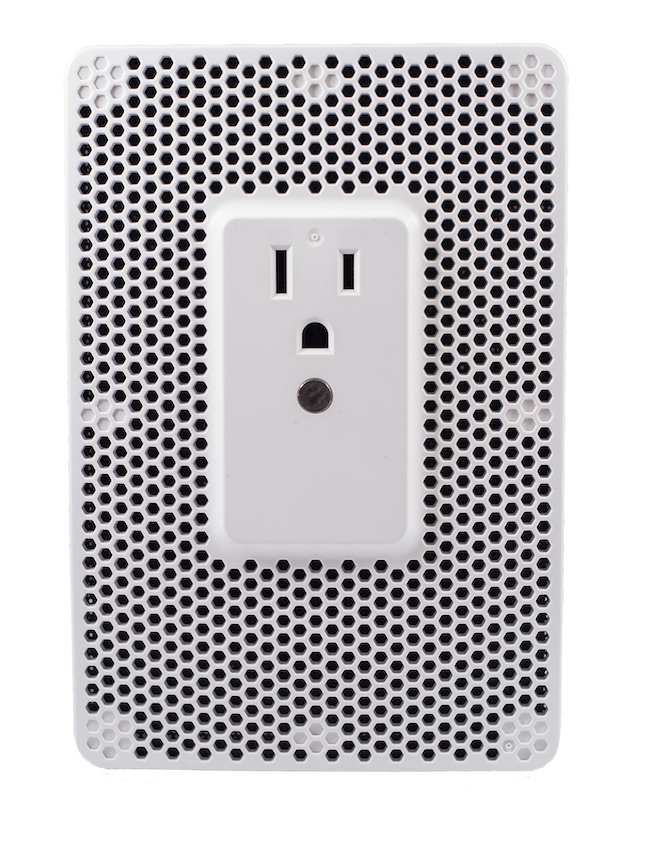
The FreshAir1 Smoking Detection System detects tobacco and marijuana smoking.

When smoking is detected in monitored space, the device sends users an immediate alert via email, computer desktop, and/or mobile phone push notification. Incident reports are timestamped, providing proof to enforce no-smoking policies. Alert history, device information, and additional information can be archived in the account through FreshAir’s mobile app or online portal.  

About the Author

Yvonne Marquez is senior editor of Spaces4Learning. She can be reached at [email protected].

Featured

  • Vanderbilt to Partner with ABM for Campus Preservation and Modernization

    Vanderbilt University recently announced that it has selected ABM Performance Solutions for a preservation and modernization project at its New York City campus, according to a news release. ABM will deliver its end-to-end ABM Performance Solutions (APS) model to manage critical operations during renovation and maintenance.

  • Miami University Approves New $242M Multipurpose Arena

    Miami University in Oxford, Ohio, recently announced that its Board of Trustees has approved construction of a new multipurpose arena at Cook Field, according to university news. The $242-million project will serve as a new centralized hub for student life and create space for economic development on campus.

  • Pitzer College

    Designing for Change in Higher Ed Learning Environments

    Higher education will continue to evolve, and learning environments must evolve with it. By prioritizing adaptable infrastructure, thoughtful reuse, strong energy performance, and wellness-centered design, campuses can create spaces that support learning today while remaining flexible for the future.

  • Harvard Announces Replacement Facility for Native American Program

    Harvard University in Cambridge, Mass., recently announced that construction will begin this spring on a new home for its Native American Program, according to university news. The 6,500-square-foot, all-electric building will stand three stories and serve as the central hub for the Harvard University Native American Program (HUNAP).