Smoking Detection Company Offers Product that Monitors for Tobacco, Marijuana Smoking

FreshAir, a smoking detection company, announced a new product that detects tobacco and marijuana smoking. The FreshAir1 Smoking Detection System is capable of monitoring up to 500 square feet and is suited for educational facilities to enforce no-smoking policies.
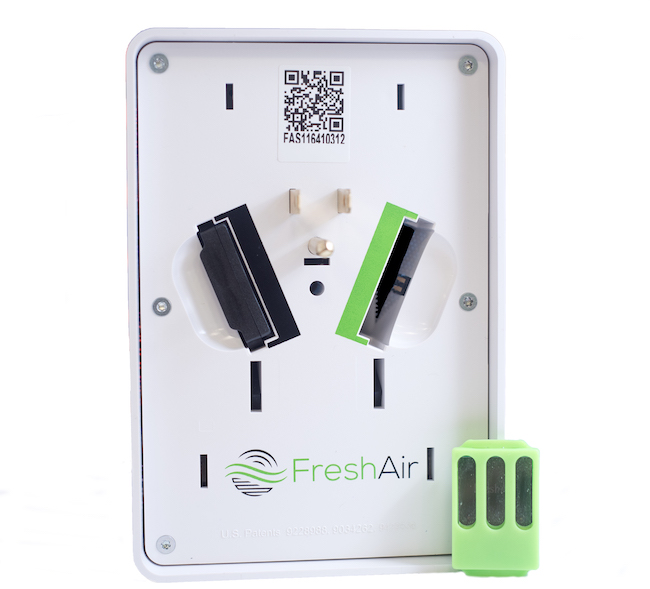
The FreshAir1 Smoking Detection System detects tobacco and marijuana smoking.

The FreshAir system sensors are “capable of detecting specific molecules in tobacco smoke and marijuana smoke,” according to a press release. Typical smoke detectors use light or radiation to detect general particles.

The devices can be plugged into standard outlets and are secured with tamper-proof screws. The devices are Wi-Fi enabled and can connect to a building’s network to connect to FreshAir’s monitoring platform.
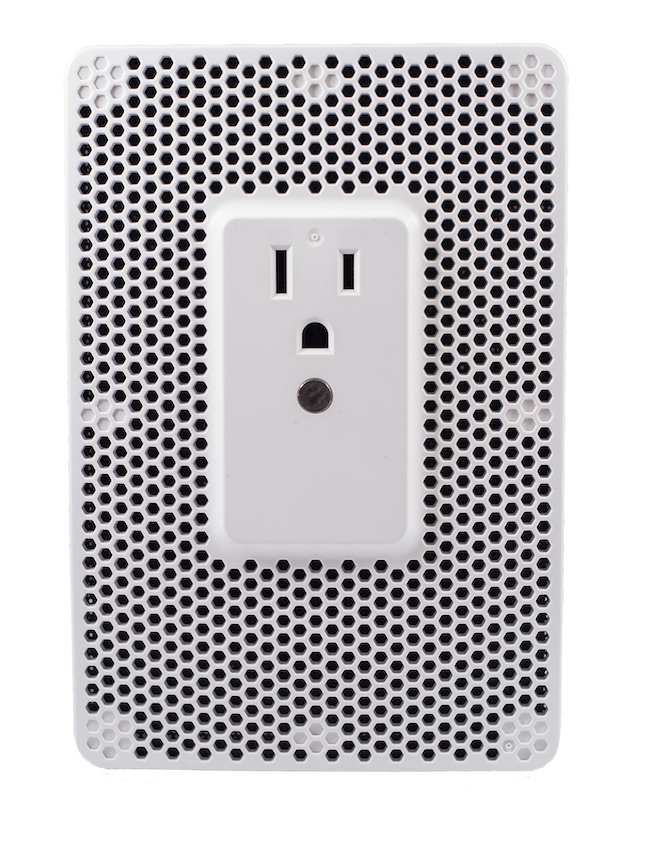
The FreshAir1 Smoking Detection System detects tobacco and marijuana smoking.

When smoking is detected in monitored space, the device sends users an immediate alert via email, computer desktop, and/or mobile phone push notification. Incident reports are timestamped, providing proof to enforce no-smoking policies. Alert history, device information, and additional information can be archived in the account through FreshAir’s mobile app or online portal.  

About the Author

Yvonne Marquez is senior editor of Spaces4Learning. She can be reached at [email protected].

Featured

  • Chartwells Launches Campus Dining Evaluation Framework

    Contract food-service management provider Chartwells Higher Education recently announced the launch of BLUEPRINT, according to a news release. The evaluation framework was designed to provide a data-driven and customizable roadmap towards optimizing campus dining services and, by extension, the student experience.

  • school building with glowing circuit board patterns

    AI Is Coming to Schools — But Most School Buildings Still Run on Institutional Memory

    As school districts race to introduce AI into classrooms, administration, and curriculum planning, another conversation is happening behind the scenes: How prepared are school facilities themselves for the operational demands AI will create?

  • Rethinking K-12 Schools as a Continuous Learning Experience

    Most students move through three or more separate facilities during their K-12 journey, yet the built environments they encounter at each stage have traditionally been designed in isolation, with little continuity in spatial language, learning philosophy, or physical resources. Each new school is a reset with different layouts, learning models, expectations, and ways of moving through a building. The next generation of school design is making the case that the first day of kindergarten and the last day of high school can and should feel connected through common support systems and infrastructure in the physical environment.

  • Minnesota District Converts Middle School into Community Hub

    White Bear Lake Area Schools in White Bear Lake, Minn., recently announced the end of a major renovation project that converted a former middle school into a new centralized district and community hub, according to a news release.