University of Cincinnati's Health Sciences Building
Meeting growing demand with flexible, collaborative design
As demand increased for the
University of Cincinnati’s programs in allied
health sciences, students and faculty had
outgrown their space, often using makeshift
study areas in hallways and struggling to find
places for group work. The old buildings were
scattered across campus and did not support the
collaborative learning that today’s health sciences
field demands.
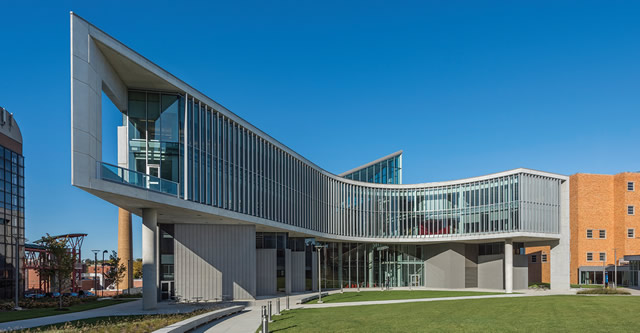
Combined, this was the catalyst for the design
of the modular, flexible plan and large open spaces
in the new Health Sciences Building that were
intended to inspire cross-disciplinary collaboration
and easily flex to accommodate future needs —
and the unexpected, such as a pandemic.
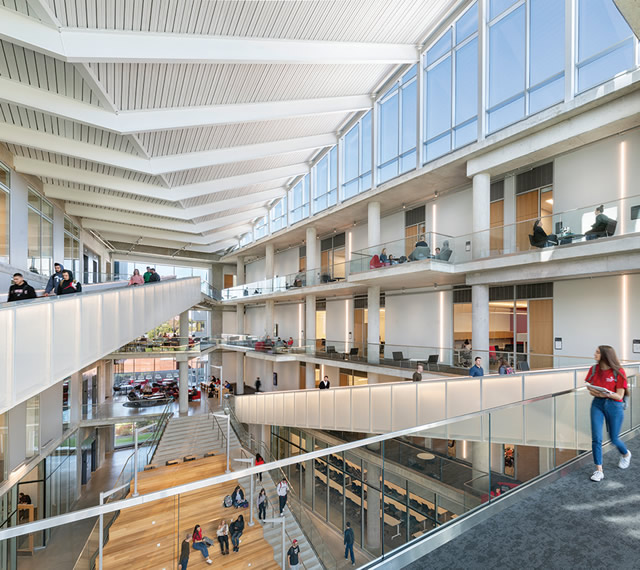
During design, the greatest need was how
to plan for enrollment and occupancy growth.
That was before the coronavirus outbreak: now,
looking towards life post-COVID-19 and as
institutions plan how to safely reopen campuses,
the facility’s flexible design will make it easier
for users to keep their distance, pivot to hybrid
learning, and maintain public health guidelines
while using the space. When the building can
safely open to full capacity, 1,200 students and
130 faculty and staff can learn and teach in a
facility that encourages engagement and is the
centerpiece for a new, connected health campus.
There is plenty of room to maintain physical
distancing guidelines and generous natural light
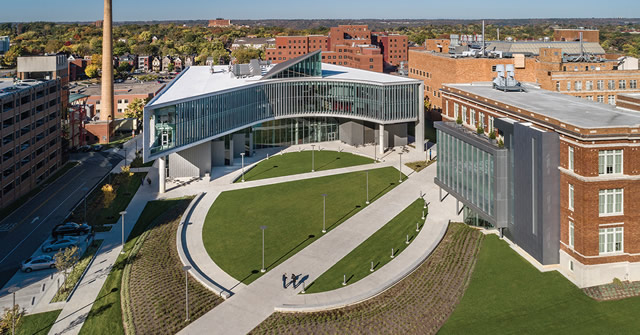
throughout. Set back from the street to create
connections with other campus buildings, the
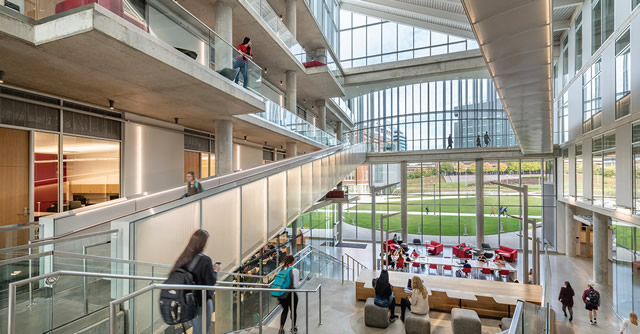
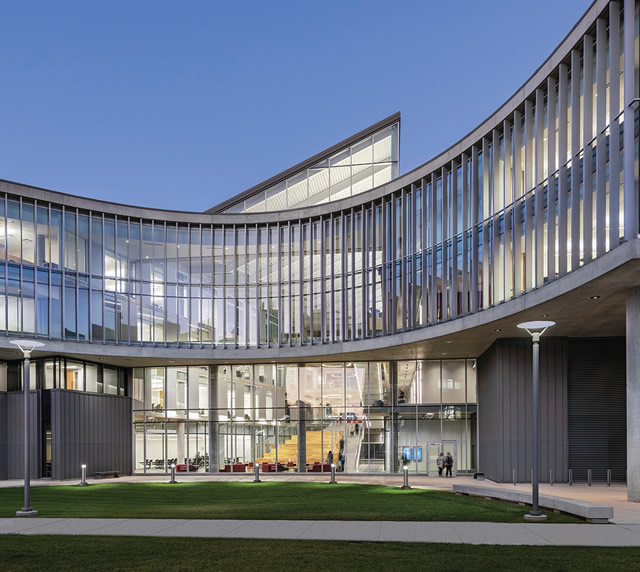
crescent-shaped building where classrooms and
balconies overlook a four-story atrium provides a
functional learning environment on the cohesive
medical quad.
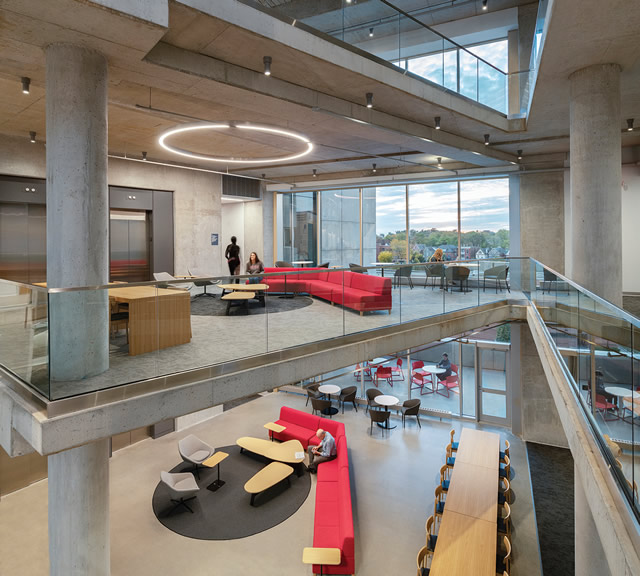
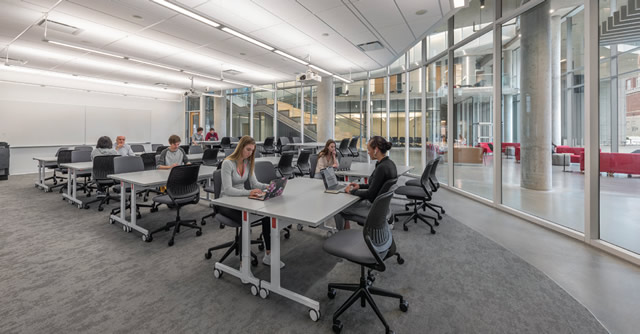
“We wanted a building with plenty of
light and a healthy atmosphere, to encourage
collaboration among the Academic Health Center
colleges,” says Dale Magoteaux, project manager
at University of Cincinnati.
The design team and faculty worked together to determine how the facility will
handle expected growth — as well as changes
impossible to anticipate, like the coronavirus
outbreak. “With this building we wanted to
create a true sense of place: a permanent yet
flexible home for these programs that will
help the department of allied health sciences
navigate a rapidly changing industry and world,”
says Mark Jolicoeur, managing principal at
Perkins and Will. “Being able to provide the
architectural design support while quickly
adapting to the changing needs required in the
face of COVID-19, were key drivers in developing
new standards in higher education with this
project,” says Vince Terry, AIA, NCARB,
NOMA, who serves as regional director for
Moody Nolan’s Cincinnati office.
Key design features include:
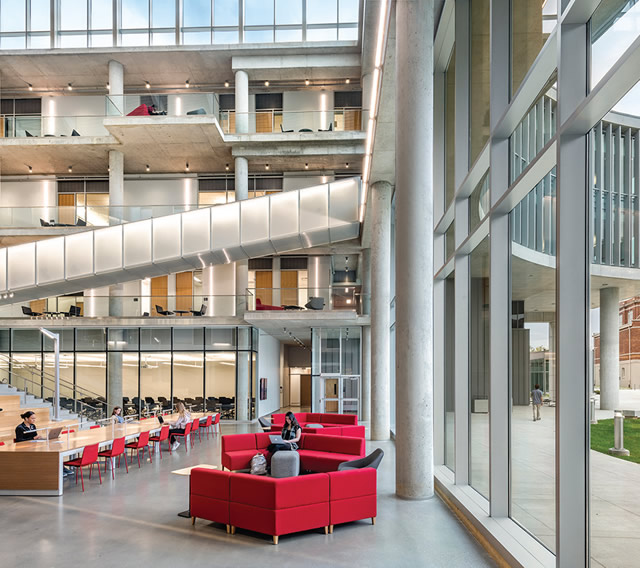
Interdisciplinary collaboration: glass-walled
classrooms and labs feature large, airy breakout
areas along adjacent balconies, which provide
opportunities for informal discussions and
project work. Bridge like stepped ramps span the atrium
to promote wellness: In many older classroom
buildings, vertical circulation is handled with
simple egress stairs tucked in remote corners,
with little to no windows; here, the building
celebrates vertical movement providing
sculptural visual interest from all viewpoints and
allowing views back into the classrooms and labs,
truly putting learning on display.
A hands-on clinical training space: students
get real-life work experience early in their
careers. The facility serves the local community
through its clinic and acts as a beacon for the
university’s personalized outreach programs
within the greater Cincinnati region.
Active learning spaces like a nutrition lab
and gait lab: these spaces were planned into
the building to build industry partnerships and
community connections. Similar transparent
work areas throughout remind visitors of the
program’s mission of service and active learning.
Insulated precast wall panels, structural
thermal isolators, and double layer slabs: these strategies help the building meet energy
goals and achieve structural feats while
maintaining the monolithic appearance of an
exposed concrete building.
This article originally appeared in the Fall 2020 issue of Spaces4Learning.