School Bus Miles Dropped by 40% in 2020
- By Dian Schaffhauser
- 02/19/21
Remote learning has had a dramatic impact on the number of miles school buses drove in the past year. According to Synovia Solutions, which produces a school bus tracking app called Here Comes the Bus, school buses reduced their miles by 40% in 2020, a total of two billion fewer school bus miles during the year.
The average district fleet shrank mileage from 102,000 miles in 2019 to 56,000 in 2020. That reduction resulted overall in 40,000 fewer tons of "smog compounds."
The company tracks 110,000 buses across North America, including seven of the largest fleets in the United States. The median fleet size tracked has between 60 and 75 buses.
"The pandemic has challenged school districts like few events in the history of education, but it also unleashed a wave of resourcefulness and innovation that will persist when the struggle of the virus fades," said Brad Bishop, product director for Here Comes The Bus, in a statement. "We saw our school bus tracking app converted into a system to more safely deliver food to families in countless districts, and our Bus Guardian product was adopted with intensity and velocity that were unthinkable before most of us were familiar with the life-saving power of contact tracing. We look forward to leveraging our technology to help our customers emerge from this challenge and return students to where they can learn, grow and thrive: the classroom."
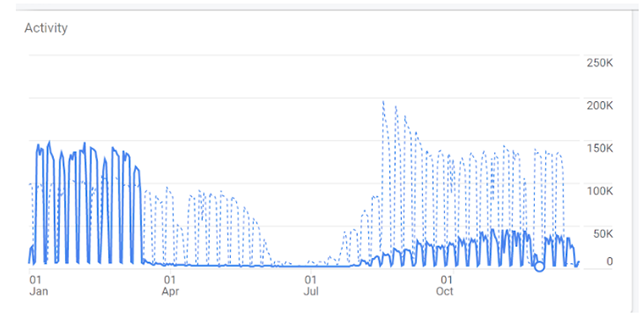
This diagram charts the use of the Here Comes The Bus app over the course of 2020. The dashed line indicates usage during a regular year, primarily to track arrival of the school bus for pickup or drop off. The solid line shows app usage during 2020, during which school buses were also used to deliver meals to families as well as mobile Wi-Fi.
Source: Synovia Solutions
About the Author
Dian Schaffhauser is a former senior contributing editor for 1105 Media's education publications THE Journal, Campus Technology and Spaces4Learning.