zSpace Introduces Headset-Free AR/VR System
Immersive learning company zSpace has debuted the zSpace Imagine Learning Solution, a headset-free AR/VR laptop system designed for elementary education. The all-in-one platform integrates hardware, software, and hands-on lessons to create dynamic learning experiences for young students.
"With the launch of the Imagine Learning Solution, zSpace is thrilled to extend our immersive learning experiences to elementary learners for the first time," said Paul Kellenberger, CEO at zSpace, in a statement. "Our commitment to fostering curiosity, engagement, and real-world connections in education continues with this groundbreaking solution, providing young students with an unparalleled learning experience that sparks creativity and a love for learning."
Available for both classroom learning pods and school-wide labs, the bundled solution includes the following key components:
- zSpace Imagine AR/VR Laptops: Featuring a built-in eye-tracking camera and included stylus sensor module and stylus, these devices provide an immersive, interactive experience without the need for headsets or 3D glasses, according to the company. All laptops come with a three-year warranty.
- Software: A collection of standards-aligned applications cover essential subjects such as math, science, language arts, and more, plus activities for career exploration.
- Lessons and activities: The bundle includes a library of interactive lessons and activities tailored to elementary curriculum standards.
- Professional learning for educators: zSpace offers on-site and virtual professional development to help teachers integrate the technology into their classrooms.
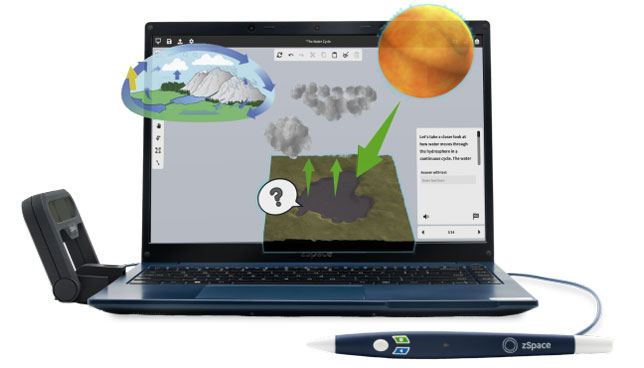 zSpace Imagine Learning Solution
"Integrating the original zSpace learning devices into the STEM program and innovation lab at M.A. Jones Elementary School provided students with the opportunity to engage in the engineer-design process by developing solutions in a virtual space before building them," shared Retha Woolfolk, Ph.D., former principal at M.A. Jones Elementary School. "Specifically, our students solved a local insect issue by researching and building prototypes of bat houses virtually (on zSpace) before actually building and installing the bat houses at our local community garden. Having a solution that is built specifically for elementary learners with applications supporting content standards at the elementary level will provide elementary schools with an expanded opportunity to innovate in ways that may not have been possible before."
Visit the zSpace site for more information.
About the Author
Rhea Kelly is editor in chief for Campus Technology, THE Journal, and Spaces4Learning. She can be reached at [email protected].