 Compton High School
 Compton High School
 Compton High School
 Compton High School
 Compton High School
 Compton High School
 Compton High School
 Compton High School
 Compton High School
 Compton High School
Project Information
Facility Use: K-12 Institution
Project Type: New Construction
Category: Whole Building / Campus Design
Location: California
District/Inst.: Compton Unified School District
Chief Administrator: Dr. Shannan Soto, Chief Administrative Officer
Completion Date: 08/01/2025
Gross Area: 223,650 sq. ft
Area Per Student: 124.25 sq. ft
Site Size: 34 acres
Current Enrollment: 1,438
Capacity: 1,800
Cost per Student: $128,888
Cost per Sq. Ft.: $1,037
Total Cost: $232,000,000
On the morning Compton High School reopened its doors, a profound sense of pride spread across the 34‑acre campus. Scholars, families, educators, and alumni gathered before a new school that represented far more than its architecture. It stood as a renewed belief in the potential of Compton’s young people and the culmination of a decade-long effort by Compton Unified School District (CUSD) to align its learning environments with its steadily rising academic performance, innovative programming, and growing student aspirations.
In 2012, the district faced significant challenges including aging facilities, low graduation rates, and learning spaces ill equipped for modern collaboration. Under the leadership of Superintendent Dr. Darin Brawley, CUSD embarked on a bold transformation grounded in equity and a deep commitment to student achievement. Graduation rates rose dramatically, new CTE and arts pathways emerged, and academic growth accelerated. Yet the century-old Compton High campus could no longer support the district’s vision. Reimagining the school became essential to sustaining progress, nurturing community trust, and creating an environment that honored the dignity and potential of every student.
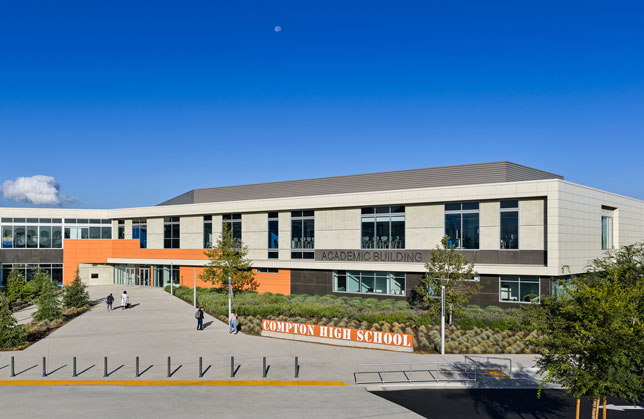
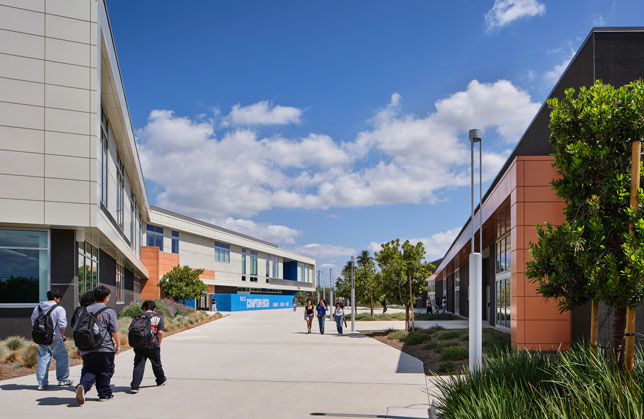
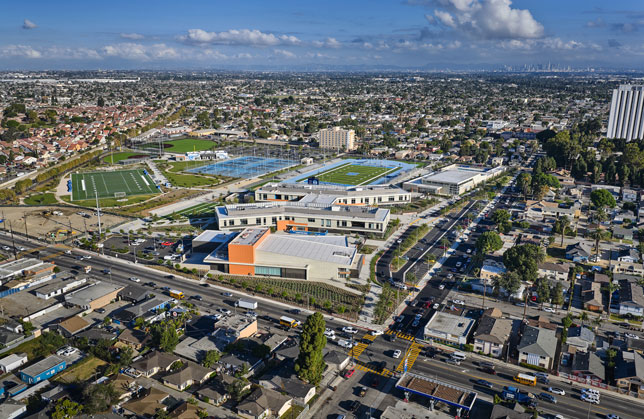
The new $232 million, 223,650 square foot Compton High School stands today as the physical manifestation of that vision. Guided by the principle of “On Common Ground,” the campus unites learning, arts, athletics, and community life along a central civic spine known as the Academic Boulevard. Flexible learning suites replace outdated classroom models, while ground level CTE studios with transparent walls showcase student craftsmanship and creativity. A professional quality performing arts center honors the city’s cultural legacy, and collegiate level athletic facilities elevate both student achievement and community pride. The result is a model of twenty first century learning that is flexible, inclusive, sustainable, and deeply rooted in its community.
Project Goals and Vision
The district’s overarching goal was to create a modern learning environment that advances educational equity and supports whole child development. In doing so, it sought to provide rigorous, future ready academic spaces aligned with college and career pathways while making learning visible through transparent studios and shared collaboration zones. Strengthening community connection was essential, as was ensuring flexibility to support evolving educational models and emerging technology. The district also aimed to elevate opportunities in the arts and athletics by designing professional grade facilities, all while integrating sustainable strategies that promote health, efficiency, and environmental responsibility. Above all, the district aspired to build a campus where every student feels a sense of belonging. It wanted a school that celebrates identity, elevates ambition, and communicates that excellence is expected and achievable.
Meeting Educational Program Needs
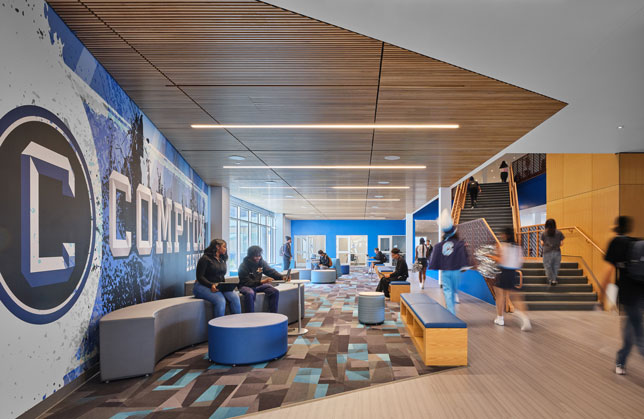
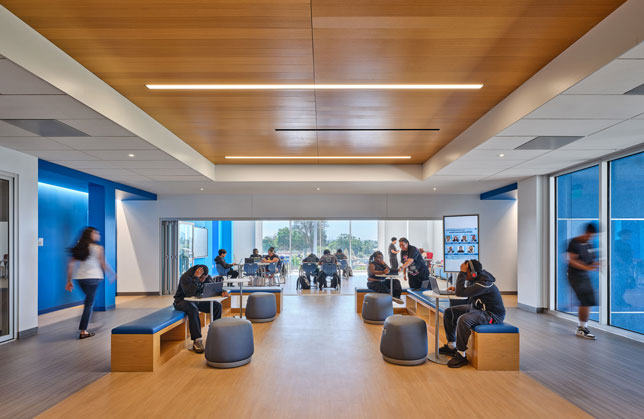
The new campus was designed to support CUSD’s comprehensive instructional program through a network of flexible, specialized, and student-centered environments. Reconfigurable learning suites now accommodate a range of instructional modes including project based and interdisciplinary learning, small group study, presentations, and teacher led demonstrations. These suites connect classrooms with breakout rooms, collaboration spaces, and teacher planning areas, allowing educators to shift fluidly between teaching methods.
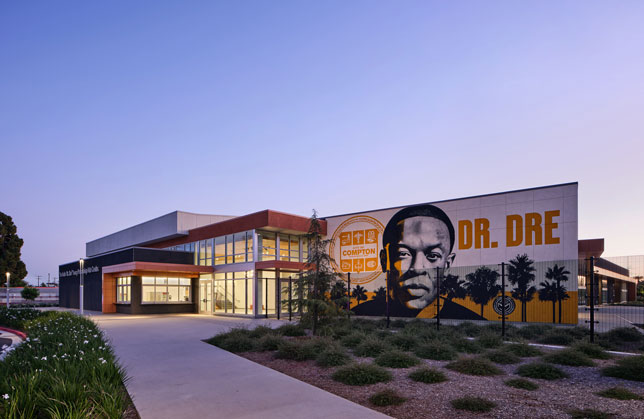
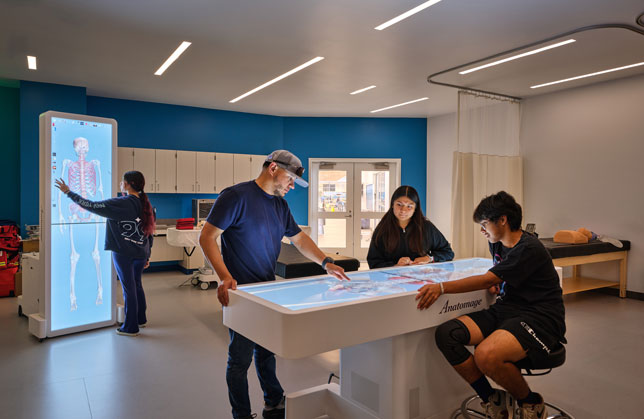
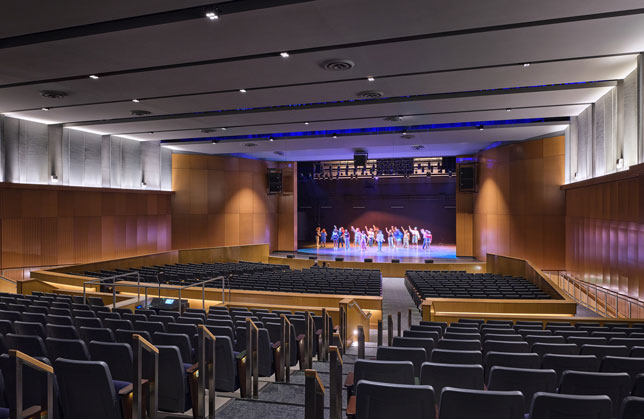
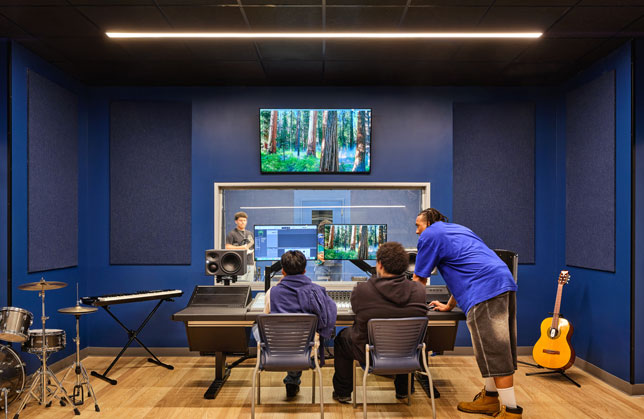
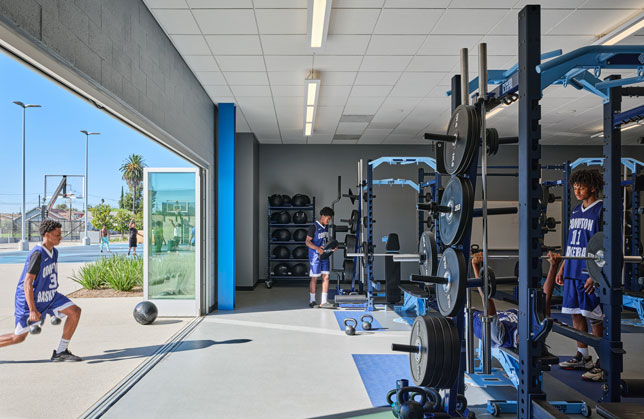
CTE programs are placed prominently on display through ground level studios for Construction, Manufacturing, Robotics, Media Arts, Engineering, and Culinary Arts. Large glass walls, outdoor access, and nearby collaboration zones elevate the visibility of hands-on learning and invite students to explore advanced pathways. The digital-first library serves as a media rich research hub with zones for content creation, group collaboration, and independent study. The Andre “Dr. Dre” Young Performing Arts Center, which includes rehearsal suites, recording studios, and a professional quality theater, supports high level artistic expression. Collegiate caliber athletic facilities, including a stadium, pool, gymnasium, and fields, reinforce student excellence and community identity. These environments together promote balanced academic, creative, and physical development.
Planning Process
The planning process was intentionally inclusive and deeply collaborative. Early visioning workshops involving district leaders, educators, and students established core values, instructional priorities, and long-term aspirations. A District led design competition encouraged innovative thinking, and conceptual models were publicly displayed to invite feedback from families, staff, and students. Through iterative design workshops, program needs were refined and aligned with instructional strategies. As construction progressed, educator training sessions prepared teachers for new technologies, flexible learning suites, and modern furnishings. Daily coordination among the district, design team, and contractor ensured that the schedule, budget, and safety remained on track. Every decision was tied back to educational outcomes.
Special Challenges and Solutions
Designing a 34-acre campus within a dense neighborhood presented challenges, particularly because the existing school required full demolition. To maintain community safety and minimize disruption, the team implemented a three-phase construction plan that controlled traffic and allowed athletic and community programs to resume quickly. Replacing a 126-year-old campus also created complex infrastructure issues involving historic utilities and aging systems. Early utility packages and extensive modernization efforts ensured smooth site development.
Global supply chain volatility and labor shortages threatened progress. Flexible procurement strategies, early purchasing, and a strong local hiring initiative helped keep the project moving. Another major challenge involved rebuilding community trust after years of facility decline. Regular community meetings, public design reviews, and the “Built by Compton” workforce initiative fostered transparency and a renewed sense of ownership.
Unique Features and Innovations
Compton High School introduces several innovations that position it as a national model for educational design. The Academic Boulevard creates a unified civic spine that connects key academic, arts, and athletic zones. Teacher collaboration suites replace traditional isolated classroom models and support professional learning communities. Transparent CTE studios elevate the visibility of hands-on learning, while the digital first library supports media creation and collaborative research. The performing arts center, supported in part by Dr. Dre, provides a professional setting for high quality performance and cultural expression. Together, these features ensure the campus remains adaptable and inspirational for decades.
Safety and Security
The campus integrates safety measures that balance openness with protection. A secure entry sequence controls access to the school, and zoned circulation separates public event spaces from academic areas. Transparent design supports passive supervision by reducing blind spots, and modern communication systems, cameras, and access controls enhance emergency readiness. Thoughtful site planning minimizes hidden areas and ensures safe pedestrian movement across campus. The result is an environment that feels welcoming while still prioritizing safety.
Sustainability and Environmental Stewardship
Sustainability plays a central role in the design. Building orientation maximizes natural daylight and reduces energy use, while solar ready infrastructure allows for future renewable energy installations. Low flow fixtures and purple pipe readiness decrease water consumption, and white reflective roofs with drought tolerant landscaping help mitigate heat island effects. CHPS verification provides measurable benchmarks for improved energy efficiency, water conservation, and indoor air quality. These strategies create a healthy and resource efficient campus that supports student wellbeing.
Site Planning and Landscape
The 34-acre site is organized to support clarity, safety, and community engagement. Pedestrian friendly pathways connect all major program areas, and outdoor learning environments with shaded seating extend opportunities beyond traditional classrooms. Athletic fields are oriented for optimal sunlight and spectator comfort, and drought resistant landscaping reduces irrigation needs. The site’s circulation patterns improve safety for both daily operations and large events. The campus functions as both an educational setting and a community destination.
Cost Effectiveness
The campus was designed for long term value. Durable materials reduce maintenance costs, and energy efficient systems lower utility expenses. Multi-use spaces limit the need for future construction. Local hiring initiatives also reinforced economic investment within Compton, contributing to the project’s broader community impact. These strategies reflect responsible and forward-thinking stewardship of public funds.
Compton High School stands as a transformational project that reflects educational ambition, architectural innovation, and community resilience. It represents the aspirations of a city that believes deeply in its young people and demonstrates what becomes possible when a community invests boldly in its future. Through thoughtful planning, inclusive engagement, and a commitment to equity, the campus provides a launchpad for academic excellence, creative exploration, and lifelong opportunity. It is more than a modern facility. It is a testament to belief, collaboration, and collective vision.
Architect(s):
DLR Group