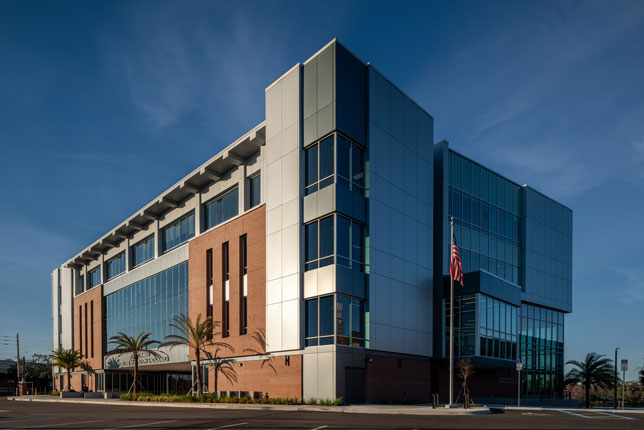
 Porter Family Center for Innovation and Academics
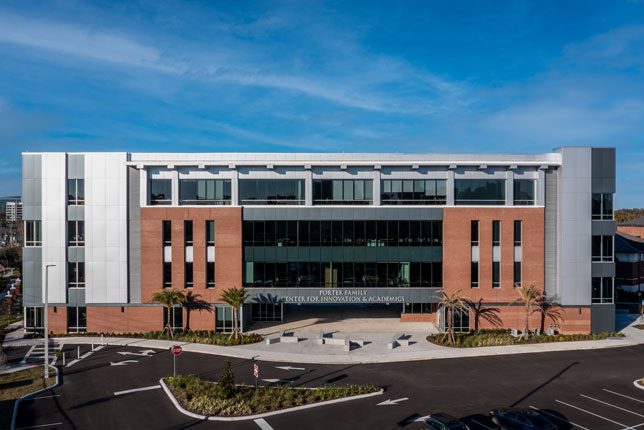 Porter Family Center for Innovation and Academics
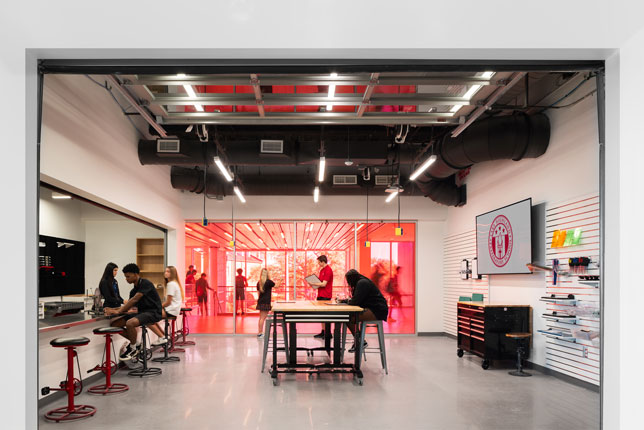 Porter Family Center for Innovation and Academics
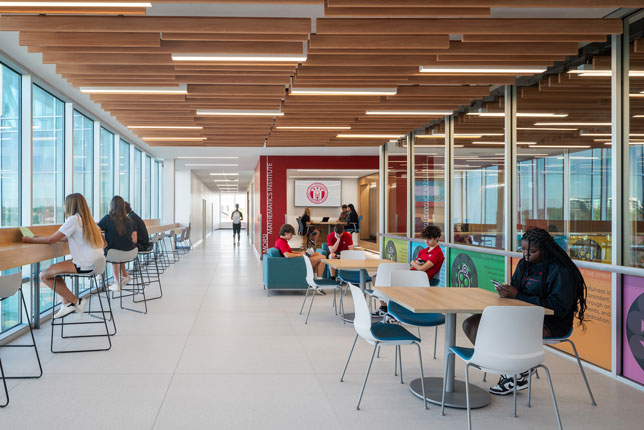 Porter Family Center for Innovation and Academics
 Porter Family Center for Innovation and Academics
 Porter Family Center for Innovation and Academics
 Porter Family Center for Innovation and Academics
 Porter Family Center for Innovation and Academics
Project Information
Facility Use: K-12 Institution
Project Type: New Construction
Category: Whole Building / Campus Design
Location: Florida
District/Inst.: Lake Highland Preparatory School
Chief Administrator: Jim McIntyre, President
Completion Date: 08/01/2025
Gross Area: 71,000 sq. ft
Area Per Student: 120 sq. ft
Site Size: 22.53 acres
Current Enrollment: 2,072
Capacity: 594
Cost per Student:$48,822
Cost per Sq. Ft.: $408
Total Cost: $29,000,000
For more than seven decades, Lake Highland Preparatory School has anchored the educational and civic identity of downtown Orlando. Spanning 42 acres and shaded by centuries-old oaks along the shores of the lake that inspired its name, the campus is rich in history. Its origins trace back to 1944, when trustees of Orlando Junior College acquired the 26-acre James Laughlin estate. Once the property of former Florida Governor John Martin, the estate featured sprawling citrus groves along Lake Highland. What began as a modest private college has since evolved into one of the region’s most respected college preparatory institutions. The school’s culture cultivates intellectual curiosity, whole-child development, and a commitment to preparing students not just for college, but for lives of meaningful contribution.
The Porter Center for Innovation & Academics embodies the 2018 Strategic Plan, which captured input from hundreds of stakeholders—students, faculty, staff, parents, alumni, and trustees. Their vision shaped every design decision, translating aspirations for academic excellence, interdisciplinary learning, and future-ready environments into a building that produces learning, fosters curiosity, and prepares students for life beyond the classroom. The Strategic Plan emphasized student-centered experiences, collaboration, and flexible, technology-rich spaces—and the Porter Center delivers on every ambition.
Hale Hall (1955) and Johnston Hall (1958), the campus’s core academic buildings for decades, had reached the end of their functional lives. Replacing these structures required more than new classrooms; the project demanded a facility capable of supporting modern pedagogy, interdisciplinary learning, and community engagement on a tightly constrained, ecologically sensitive site.
Pedagogy as the Driver
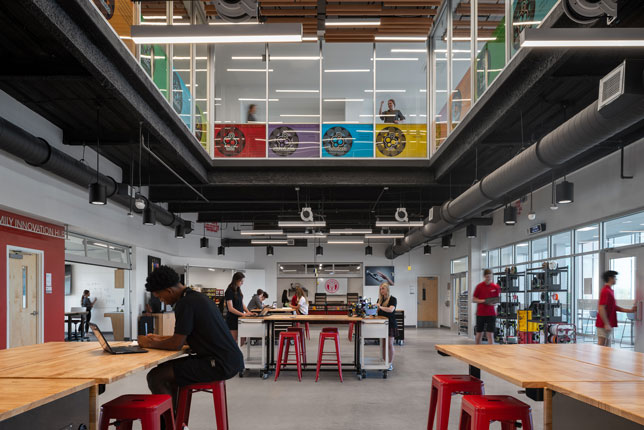
From inception, the Porter Center was conceived as a pedagogical instrument, not just a building. At its heart, the Innovation Institute forms a shared ecosystem where STEM and humanities converge. Robotics, engineering, mathematics, physics, computer science, and language arts coexist in flexible, unassigned spaces that encourage collaboration, experimentation, and inquiry. Maker labs, gaming labs, and interdisciplinary studios allow students to move seamlessly between disciplines.
Teachers report profound shifts in learning. In one English 11 class, students used the maker space to design board games inspired by literature, blending analysis, creativity, and peer collaboration. Here, the building achieves its purpose: connecting abstract concepts with tangible outcomes.
Flexible learning zones throughout the facility support rapid reconfiguration for robotics competitions, problem-solving exercises, college fairs, and other activities, ensuring spaces evolve alongside pedagogical innovation.
Designing Within Constraint
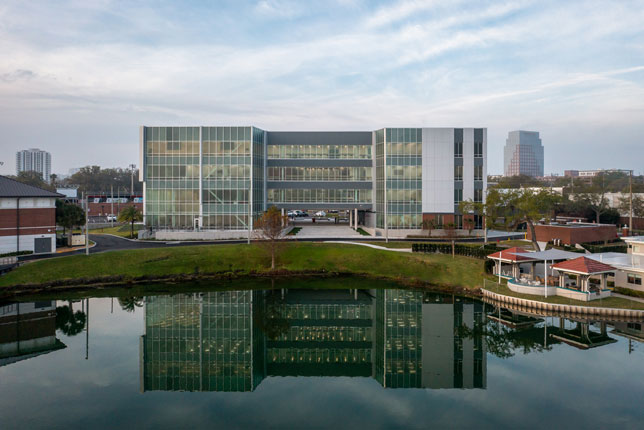
The Porter Center occupies a highly constrained site along Lake Highland, flanked by active buildings, a lakefront easement, and sensitive ecology. Constructed within ten feet of Hale and Johnston Halls—occupied throughout construction—the project required precision sequencing and coordination. All critical infrastructure systems—power, IT, communications, and security—were operational before occupancy, allowing a seamless summer transition. Historic halls were demolished using controlled techniques to protect the new facility.
This choreography demonstrates how design, planning, and construction can align with academic continuity, delivering transformative infrastructure without disrupting learning.
Engineering Innovation Below Grade
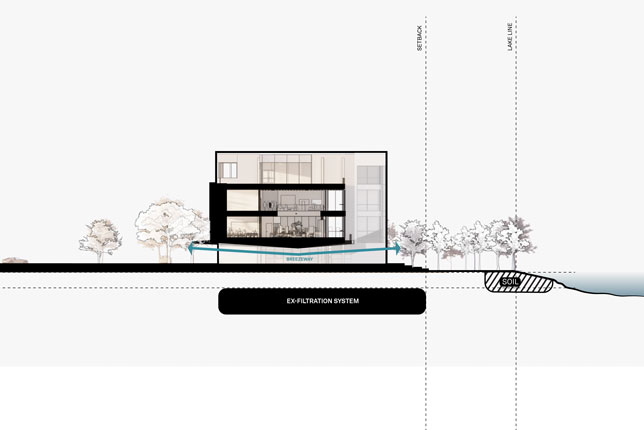
Proximity to Lake Highland and hurricane-driven flooding risk necessitated unconventional stormwater management. Limited site area and ecological sensitivity precluded traditional surface retention. An underground exfiltration system beneath the elevated connector linking two towers provides 5,600 cubic feet of additional treatment capacity beyond pre-development conditions.
The system ensures long-term accessibility for maintenance, reduces operational costs, and protects the lake ecosystem. Simultaneous upgrades to aging campus infrastructure aligned long-term performance with immediate operational needs.
Biophilic and Evidence-Based Design
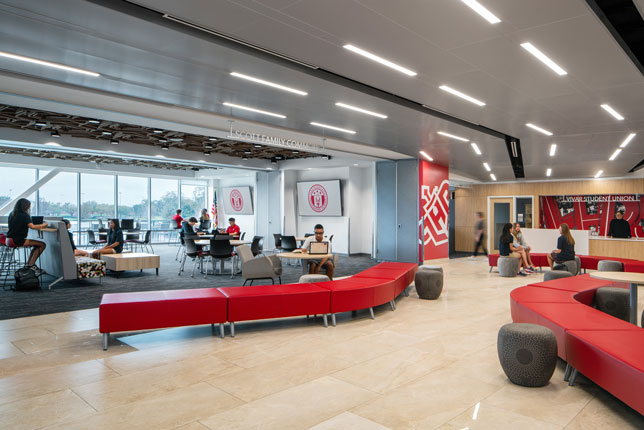
Biophilic design elements, including acoustical ceiling baffles, nature-inspired lighting, and wood-patterned vertical elements, create a calming, collegiate atmosphere. Vibrant graphics and reclaimed wood furniture throughout the space reflect the school’s history, connecting the institution’s past to its forward-looking mission. These thoughtful material and design choices support academic development while fostering social and emotional growth.
Interior circulation spaces promote engagement and interaction: porous corridors and social stairs encourage movement and collaboration, while strategically placed windows offer lakefront views that connect students to their surroundings. The interior narrative moves from earth to canopy: fractal-patterned ceilings evoke roots on the first floor, vertical wood elements rise through circulation, and a fourth-floor canopy completes the progression. The fourth-floor study bar, oriented toward the lake, offers light-filled spaces for independent and collaborative learning. Faculty observe that students increasingly leverage natural light and views, promoting healthier study habits. Together, these elements integrate the building seamlessly into the broader campus, reinforcing a sense of community and belonging.
Flexible Learning Environments and Outcomes
Full-height writable walls, dual-display screens, and operable partitions allow classrooms to adapt to multiple simultaneous activities. Spaces transform to accommodate STEM competitions, literary projects, peer mentorship, or independent study.
The Tillman Family Student Center, Scott Family Commons, Kind Library, and Vivar Student Union provide continuous academic and social engagement. Movable acoustic walls, social stairs, and integrated technology support independent work, group learning, and school-wide events. Outdoor spaces enhance learning while maintaining ecological sensitivity.
Evidence of success is clear. Fourth-floor study bars and collaboration zones are consistently occupied, demonstrating self-directed, active learning. Students use nooks and writable surfaces for problem-solving, while humanities learners repurpose maker spaces for interdisciplinary projects. The Porter Center advances the school’s mission: student-centered learning, peer collaboration, and teacher-facilitated inquiry.
Community and Regional Engagement
The facility expands Lake Highland’s capacity for large-scale events. In February 2024, the Central Florida College Fair hosted 95 college representatives and nearly 1,200 students and families—previously impossible on campus. Flexible event spaces, including the Starling Gallery, support professional development, board meetings, and school activities, bridging the school with local and regional communities.
A National Benchmark
The Porter Center exemplifies how school design can integrate pedagogy, infrastructure, sustainability, and community vision. Constructed within tight spatial and environmental constraints, it houses innovative stormwater systems, supports 800 daily students, and delivers flexible spaces fostering creativity, critical thinking, and interdisciplinary collaboration.
By translating the Strategic Plan into built form, the Porter Center provides an environment where students thrive academically, socially, and personally. Students move seamlessly from robotics competitions to literary analysis in maker spaces, collaborate on mathematics assignments, and find quiet reflection overlooking Lake Highland.
As one Class of 2024 graduate reflected:
“I’m headed to a highly selective college, and their facilities have nothing like the Porter Center. LHP has set the bar impossibly high.”
The Porter Center demonstrates the power of pedagogy-driven design, precision engineering, and sustainable innovation. It is a national model, a transformational learning environment, and a lasting embodiment of a community-driven vision for the future.
Architect(s):
Schenkel Shultz