
The three-story, 75,000 square-foot expansion and renovation of the campus provides added capacity to a rapidly growing population in the Northwest Independent School District. The project was headed by Perkins & Will.

Gen Z is advocating for immediate action to secure their future. However, limited by their age, Gen Z is looking to older generations to support them through social and legislative change and conscientious transformations — socially, educationally, and within the built-environment.
The Los Angeles Community College District has vowed to eliminate its carbon footprint entirely over the next two decades.

Several colleges and universities are pursuing solar solutions for two major reasons: to save money on energy costs and/or to meet sustainability goals through renewable energy projects. Whether you’re already pursuing a solar solution or just starting to consider your options, there are some important considerations to keep in mind, as well as certain factors that go into the most successful solar projects.
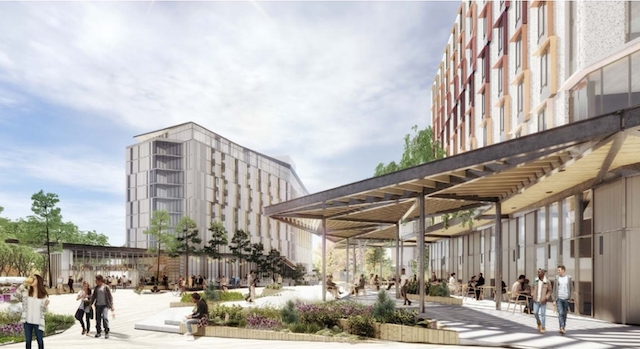
While the University of California San Diego has put some projects on hold due to financial constraints introduced by the pandemic, the university is forging ahead with construction work on its North Torrey Pines Living and Learning Neighborhood and planning for its Future College Living and Learning Neighborhood.

The Atlanta-based institution will be installing more than 15,000 solar panels on 16 campus buildings. That represents 5.5 megawatts of solar generation, enough to produce about a tenth of the university's peak energy requirements.

They are the first generation to be immersed in technology since birth, experiencing it as an extension of daily life. As future Gen Zers progress through our learning institutions, their characteristics, wants and needs will further shape K-12 education environments, university campuses and future workplaces.

Electric vehicle chargers are much more than a plug-and-play upgrade to the old gas pump.

Architects continue to design buildings much the same way they always have; yet, a carbon-free future will require new practices, namely true, front-loaded integrative design.
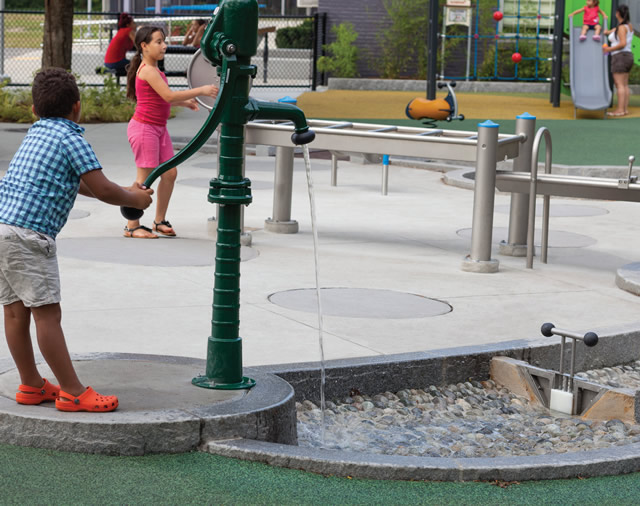
For students of all ages, carefully planned outdoor learning areas and features can become an integral component of education.
Researchers at the University of Missouri (MU) have found that “green” school buildings can help students better understand the role that humans have in and on the environment.
The new food recovery program saves edible food that would normally be thrown away and is given to food banks, restaurants, and other food distributors.
If completed, the district will install solar energy, battery storage, and electrical vehicle charging stations at school sites districtwide.

Comprehensive scoping plus planning equals savings.
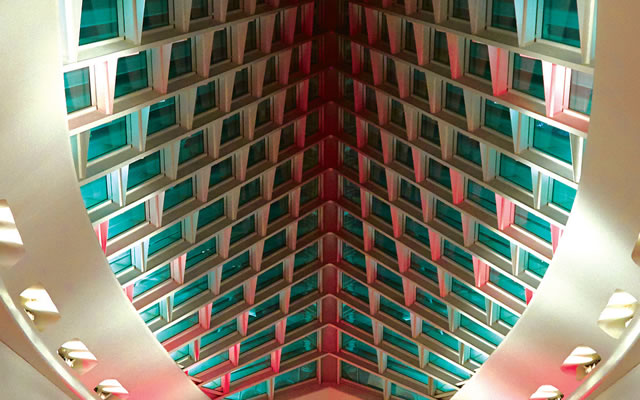
Jim McGarry, EDmarket president and CEO, reflects on this year's EDspaces conference and gives us a glimpse into the future of educational facilities design and management.
A few solutions to minimize renovation costs and support sustainablity goals.