-
In honor of Global Handwashing Day on October 15, commercial washrooms and emergency safety solutions provider Bradley Company recently released the results of its 2026 Healthy Handwashing Survey. The findings indicate simple, practical steps that facilities managers can take to encourage good hygiene on campus.
10/13/2026
-
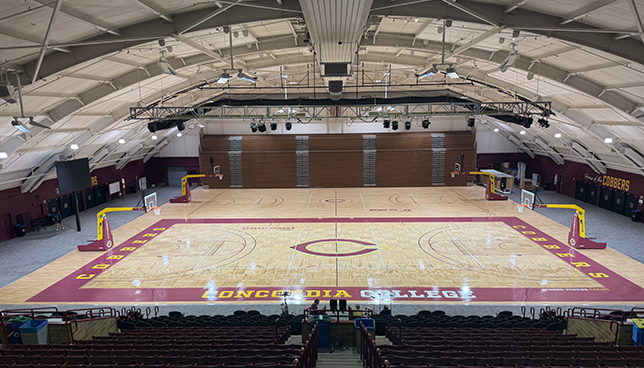
Concordia College in Moorhead, Minn., recently completed a $2.5-million renovation project to Memorial Auditorium, a news release reports. The college partnered with Kraus-Anderson for the project’s construction and ICON Architectural Group for its design.
10/08/2026
-
The University of Mary Washington in Fredericksburg, Va., recently announced that it has selected construction and development firm Skanska to lead a series of renovations and upgrades to fine arts facilities, according to a news release.
10/08/2026
-
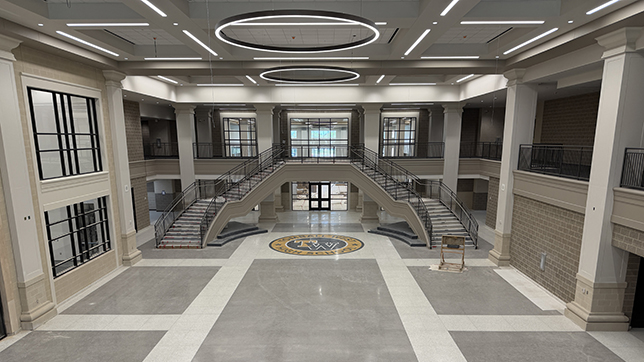
Tomball West High School near Houston, Texas, recently received a K–12 Education Best Project Award in Engineering News-Record’s 2026 Texas & Southeast Best Projects Awards, according to a press release. The new facility was completed in May and opened its doors to students for the fall 2026 semester.
10/06/2026
-
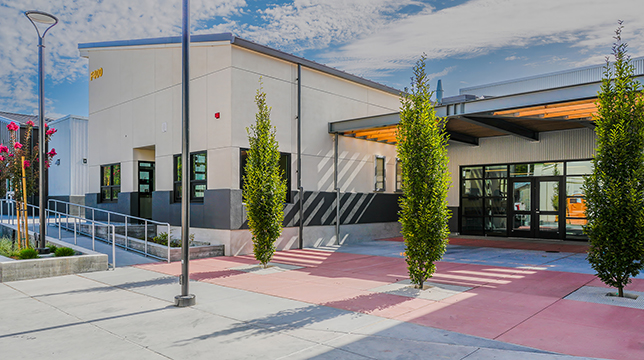
The West Sonoma County Union High School District (WSCUHSD) in Sebastopol, Calif., recently held a ribbon-cutting ceremony for the new CTE Center at Analy High School, according to a news release. The district partnered with Quattrocchi Kwok Architects (QKA) for the facility’s design and GCCI for its construction, and funding came from local Measure A bond funds.
10/06/2026
-
Carnegie Mellon University in Pittsburgh, Penn., recently announced that it has received $3 billion—the largest individual gift in higher education history—from Citadel CEO and founder Ken Griffin, according to a news release.
10/01/2026
-
The Cheyenne River Sioux Tribe (CRST) and the Cheyenne-Eagle Butte School District in Eagle Butte, S.D., recently broke ground on a new K–12 campus that will cover more than 100 acres and serve students and families across 1,600 square miles, according to a news release.
09/29/2026
-
Cranston Public Schools in Cranston, R.I., recently announced the completion of Gladstone Elementary School, according to a news release. The 100,000-square-foot facility serves as a replacement for the 1950s-era former building, and it consolidates the student, faculty, and staff populations of Gladstone and Arlington Elementary Schools.
09/29/2026
-
Washington State University recently celebrated a dedication ceremony for the new Schweitzer Engineering Hall on its Pullman campus in Pullman, Wash., according to university news. The facility measures 66,288 square feet, and its completion marks the first milestone in a larger university effort to modernize the engineering and design district.
09/24/2026
-
Georgia State University in Atlanta, Ga., recently held a ribbon-cutting ceremony for a new, nine-story, 155,000-square-foot Research Tower, according to university news. Amenities include academic classrooms, a large lecture space, teaching labs, faculty research space, and the uppermost floors reserved for future expansion.
09/24/2026
-
Integrated design firm DLR Group recently announced that it has brought three new hires on board to help shape its higher education practice in California and the northeast, according to a press release.
09/17/2026
-
The University of Washington in Seattle, Wash., recently announced the opening of Sundodger Studios, a new broadcast, production, and content facility, according to a news release. The university partnered with Anthony James Partners for the design and development of the studio, which will host about 100 live broadcasts and 120 live videoboard shows per year.
09/17/2026
-
The Urban Sprouts Child Development Center in St. Louis, Mo., recently announced the completion of a $2.3-million expansion and adaptive reuse project, according to a news release. The new space includes a retail café, outdoor learning space, and a support office building.
09/15/2026
-
The Fremont Union High School District (FUHSD) in Cupertino, Calif., recently held a Grand Opening ceremony for a new, district-wide Robotics Center, according to a news release. The 14,500-square-foot facility was designed by Quattrocchi Kwok Architects (QKA); Landmark Constructors served as the builder and Blach Construction as general construction manager.
09/15/2026
-
The University of Pennsylvania in Philadelphia, Penn., recently finished construction on an 11,800-square-foot veterinary education building, according to a news release. The Gail P. Riepe Center for Advanced Veterinary Education is the first dedicated classroom facility at the New Bolton Center, a large-animal hospital and campus about 35 miles west of the campus proper.
09/10/2026