Seats Highlight of Theatre Renovation
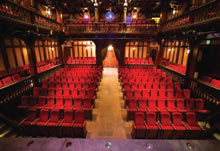
Wenger seating brings great comfort and an improved viewing experience to patrons and scholars at the Folger Shakespeare Library and Theatre.
“It was very important to us that our new chairs reflected the room’s inherent aesthetics and acknowledged its history,” explains Beth Emelson, assistant artistic producer with the Folger Shakespeare Library and Folger Theatre in Washington, DC.
Opened in 1932, the Folger is a world-renowned research center on Shakespeare that offers plays, concerts and educational activities for school groups, scholars and tourists alike.
After 20 years of heavy use, the previous seats were starting to fail. The upholstery was tearing; loose springs and nuts rattled noisily. New seats were the centerpieces of general renovations that carefully respected and preserved the Folger’s historic status.
The facility’s design is based on Elizabethan inn yard theatres, with a main seating area flanked by two side galleries and a balcony above. Fixed seats were installed on the main floor, with portable chairs used in the galleries and balcony.
All the Wenger seating is earning rave reviews from Folger staff and audiences alike. “Audiences have reacted very positively to the new chairs — people are really enjoying them,” says Tim Guillot, audience services coordinator.
The side galleries have two rows of chairs; during the planning process the Folger staff tried Portable Audience Chairs of different heights in order to create optimal sight lines over the balcony railings.
For the first row, 32-inch chairs were selected; second-row chairs are two inches higher. “People in the second row don’t realize their chairs are taller, enabling them to see more easily,” says Emelson.
Aesthetically, the Portable Audience Chairs mimic the fixed seats’ wood tone in the arms and seat bottoms, along with the upholstery. Emelson believes the two chair models look like they belong together.
Overall, she praises her terrific experience working with Wenger each step of the way. “Everyone on their team was responsive and understanding of our tight timeline,” Emelson concludes. “We trusted Wenger and they delivered!”
www.wengercorp.com
This article originally appeared in the issue of .