A Renaissance of Work
Career education in the modern economy.
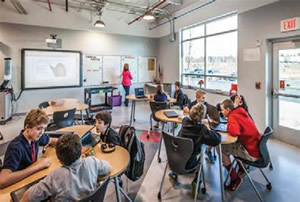
Space for soft-skills training includes flexible furniture, fixtures, and equipment so students can work independently, collaborate in teams, and lead larger groups. Image courtesy of HBA Architecture & Interior Design, Inc.
Most K-12 district vision statements include the goal of preparing students for college and career. In practice, college preparation has been the de facto goal, with career education (technical, vocational, and post-secondary programs) steadily deemphasized over the last few decades. Now career education is experiencing a renaissance.
There are several reasons for the resurgence, including the 2008 recession, an en-masse retirement of skilled laborers from the baby boom generation, rising college tuition, and the difficulty encountered when graduates with liberal arts degrees seek gainful employment in the post-recession economy.
As school districts revive career education, they face two common challenges: finding and retaining qualified instructors who can make far more money in the private sector, and providing suitable career-education space. What some districts don’t realize is they already have staff capable of teaching the soft skills required by modern employers. And, providing suitable soft-skills education space is easy with flexible furniture, fixtures, and equipment (FFE).
Soft skills help facilitate human connection. Today’s employer needs people who can communicate effectively—whether interpersonally, publicly, or through writing—without relying on emojis, LOLs, and spell-check. Employers also need people who can think creatively about new challenges in the marketplace, and who have the humility and leadership skills to work as effective team members.
Soft skills are taught by having students become “co-teachers” of content. They take the initiative of learning about a topic, working with others to fill in their knowledge gaps, and communicating effectively with peers so they can teach what they learned.
Space for soft-skill education is designed differently from space for traditional education. Soft-skill space is designed so anyone can be a teacher. The space is furnished so students can work by themselves to plan lessons, collaborate in conference settings with others to gain feedback on their lessons, and teach larger groups what they learned. Ideally, this space includes office-like settings, conference areas, and larger presentation areas.
PHOTO © INDUSTRYVIEWS
Unlike capital-intensive investments required in spaces to teach technical skills, the investments needed to support soft-skill development can be as minor as equipping classrooms with FFE. Writable surfaces, moveable walls, high-definition projectors, and portable tables and chairs to create a collaborative teaching and learning environment.
Technical-skill development is necessary but not sufficient to adequately prepare students for the modern workplace. Most districts find existing instructors who can teach communication, leadership, and teamwork skills demanded by employers. And, many districts are successful in implementing relatively low-cost capital solutions to create spaces that help facilitate the development of these soft but critical skills.
This article originally appeared in the School Planning & Management October 2018 issue of Spaces4Learning.
About the Author
David Sturtz is a partner at Cooperative Strategies, an educational consulting firm headquartered in Irvine, Calif. The firm has offices in Colorado, Ohio, and Tennessee. Contact David at [email protected].