Sustainable Flooring Solutions for High-Traffic Educational Facilities
In today’s global environment, sustainability is increasingly in the news. From the food we consume to the buildings we enter, humans around the world are taking steps towards becoming more sustainable. When it comes to educational facilities, sustainability in operations is not the only thing that school boards, parents and students look at. The very materials used to construct the facility are areas of opportunities for architects and building owners to explore green solutions.
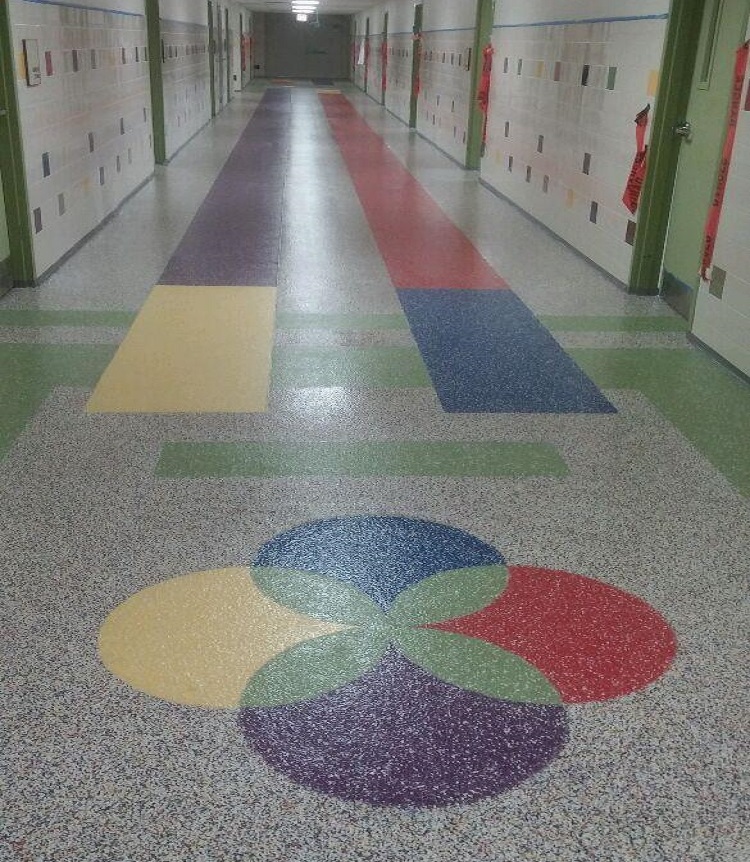
The sustainability of the various types of floor coverings has been part of design and construction conversation for several years. However, not all sustainable flooring solutions are designed to meet the needs of high-traffic facilities such as schools and universities.
Benefits of Installing Sustainable Flooring in Educational Institutions
Educational institutions play a vital role in our communities. Sustainable flooring in school facilities contributes to the well-being of students, educators and staff, and offers a range of benefits including:
- Improved Air Quality: When flooring systems are designed to contain low-emitting materials, they can support better indoor air quality in classrooms, hallways, and offices. This is particularly helpful for sensitive individuals suffering from asthma, seasonal allergies, and other respiratory illnesses.
- LEED Green Building Credits: Some types of sustainable flooring can contribute LEED credits as part of the U.S. Green Building Council’s “Leadership in Energy and Environmental Design” rating system. This can assist schools in qualifying for tax breaks and governmental incentives.
- Improved Image: Sustainable flooring and other facets of eco-friendly construction can enhance a school’s forward-thinking image. Incorporating these benefits in promotional messaging can help differentiate an institution from the crowd and attract the brightest of today’s environmentally conscious students and parents.
Sustainable flooring is a smart choice for schools interested in providing a healthy learning environment and demonstrating their commitment to a better global environment.
Sustainable Flooring Installation: Reduced Waste During Installation
An advantage offered by some types of sustainable flooring is a reduction in the waste produced during installation. The majority of floor covering solutions, including various plank, rolled and sheet goods, are prefabricated, requiring them to be cut and fitted into the shape of a given space. This can lead to large amounts of “cut-off” waste — leftover pieces that cannot be used elsewhere — that must then be disposed of in a manner that is compliant with local regulations. The disposal of this type of construction waste is costly and contributes to landfills. So much waste product also means the facility customer has paid for new flooring material that is getting thrown away.
Sustainable resinous floor coating systems offer a difference to prefabricated flooring. Because resinous coatings are used by the installer to create a customized, fluid-applied flooring surface on site, there is no cut-off waste.
Usable Life of Sustainable Flooring
One definition of the word "sustain" is "to endure." However, not every type of sustainable flooring offers the long usable life facilities might expect. For example, many surfaces can exhibit permanent dents under the weight of heavy furniture or when items get dropped.
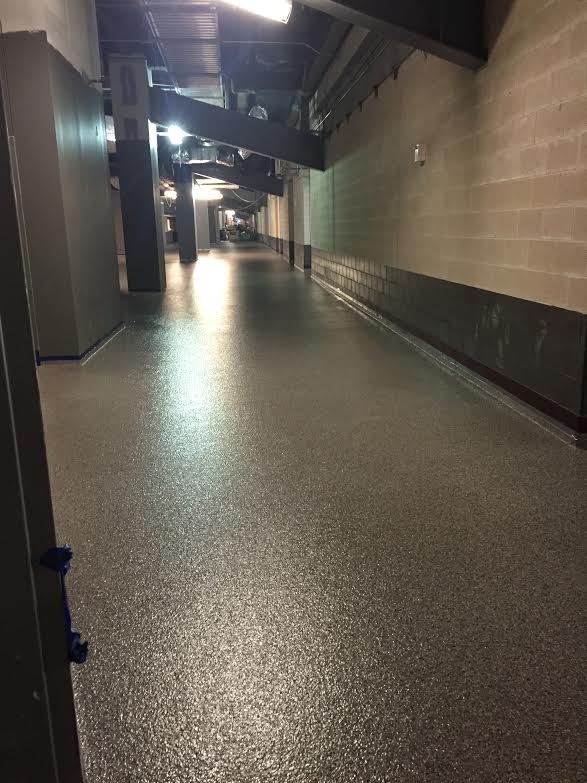
In addition, today’s stringent cleaning regimes, including more frequent use of harsh disinfectants and sanitizing chemicals, can result in a higher incidence of staining and deterioration of lower-performing floor types. More frequent cleaning in high traffic areas adds to the abrasion inflicted upon floor surfaces. Standard commercial flooring products may not be designed to withstand this level of abuse and can begin showing wear patterns and signs of damage earlier than expected. This is hardly the outcome hoped for by school districts and budget managers.
In contrast, some sustainable flooring options offer extended replacement cycles. For example, epoxy and other fluid-applied concrete floor coating solutions comprised of industrial-grade resins can look great and perform for many years or even decades — a boon for institutional budgets as well as for the environment.
Additional sustainability benefits of poured flooring systems include:
- Ability to Refurbish Existing Slabs: In many cases, high performance epoxy or cementitious urethane resurfacers can be used to refurbish existing slabs while simultaneously providing a new indoor traffic surface. This allows facilities to avoid the inconvenience, time and cost of having to destroy and haul away the old concrete to the landfill or crusher/rubble supplier. By enabling older concrete slabs to remain in place, sustainable resinous coating systems epitomize the 3R’s: "reduce, reuse, recycle."
- Recycled Material Options: Some fluid-applied resinous flooring manufacturers offer systems that incorporate recycled glass aggregate content as both a decorative element and to impart additional strength to the cured floor. In addition to an enhanced appearance, this can add even more LEED Green Building credits to the project.
- Flooring Can Remain in Place: If, at some point, the institution chooses to go in a different direction for their floor coverings, sustainable floor coatings can remain in place, allowing the new material to be installed directly on top of it. This prevents yet another trip to the landfill.
Additional Environmental Benefits of Resinous Flooring
Budgetary constraints are a constant for managers of today’s educational institutions. The following environmental benefits provided by fluid-applied resinous flooring can also help keep operational costs in check:
- Reduced Energy Consumption: Glossy, lighter colored surfaces reflect light from overhead fixtures, significantly increasing illumination in any given space. Many resinous flooring manufacturers offer a broad selection of colors and decorative blends, as well as a choice of topcoats with various gloss levels. By selecting light reflective resinous flooring solutions, institutions can install fewer lighting fixtures, thus helping to reduce their energy consumption and costs.
- Lower Maintenance: Regular waxing and stripping or shampooing of school floors requires long downtimes and inconvenience. These methods also incur excessive labor and energy costs. A better option is offered by resinous floor systems, where maintenance is convenient, quick and easy. No monthly waxing, stripping, or special equipment is required. Regular sweeping and mopping or soft-bristle auto-scrubbing is all that is typically needed. High quality, fluid-applied floors can perform and look great for many years or even decades with just a refresher coat applied every couple of years.
These are just a few of the many environmental benefits that come with adoption of polymer resin flooring — sustainability for the global eco-system as well as the facility’s bottom line.
Educational facility floors are subjected to incredible levels of foot and cart traffic, repeated cleanings, potential impact and abrasion. Sustainable, industrial-grade resinous floors provide the high performance, environmental benefits, easy maintenance and long lifecycle that fulfill the health, safety and budgetary needs of today’s educational institutions.