In Modern Learning Environments, Instructional Audio Isn’t Optional
By Ray Young
The secret is out: One of the best ways to boost student achievement is to ensure your students can clearly hear their teacher and classmates.
Decades of research have demonstrated the crucial link between instructional audio and student achievement. In addition to reducing teachers’ vocal strain, instructional audio has been proven to increase participation and engagement among all students—not just those with hearing loss.
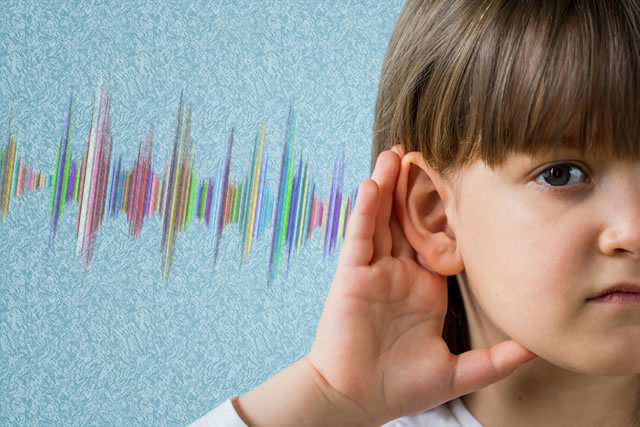
While the educational value of good acoustics is well-documented, it is not always considered in classroom design. According to a report from the American Speech-Language Hearing Association (ASHA), the acoustical properties of classrooms are often the “forgotten variables” in ensuring students’ academic success—and many U.S. classrooms do not meet preferred acoustic standards.
To design learning environments that are truly “modern,” K–12 leaders must recognize the critical link between speech intelligibility and learning. Instructional audio has gone from something that should be done to something that must be done.
Here’s why.
Modernizing Classroom Design
Today’s classrooms are active spaces where learning occurs throughout the classroom and beyond. There may be a small group working in the hallway on a project, students progressing individually, and yet another group getting direct instruction.
Without an instructional audio system in place, the following barriers can greatly impede teaching and learning:
- Hearing loss: Mild hearing loss is pervasive. About 2 to 3 out of every 1,000 children in the United States are born with a detectable level of hearing loss in one or both ears.
- Voice strain: Teaching is considered a high-risk occupation for voice disorders. Nearly 600,000 teachers miss at least one day of work per year because of voice issues.
- Distance: Students seated at the back of the room get less access to their teacher’s voice. Per the inverse square law, distance decreases the “signal strength” and sound intensity.
- Noise: To achieve LEED certification, a classroom’s background noise level must not exceed 45 dBA—which can be difficult to achieve. Using even the most conservative of research studies, the aggregation of classroom background noise typically ends up around 60 dB.
Today’s learning environments look, sound, and feel much different. Remote, hybrid and other modalities are much more common, as instruction has long since evolved from “sit and get”.
Considering that almost all of the nation’s largest 20 districts will offer remote learning options for the 2022–23 school year, school and district leaders need to factor in how to make amplification systems work for all students, regardless of where learning is taking place.
Preparing for the Future
As instructional strategies, goals and priorities shift, K–12 leaders must carefully consider how they can improve classroom design to support educators and students.
Instruction needs to focus on the unique needs and strengths of every student—likely in open community classrooms where many students have individualized instruction plans. This could mean fewer teachers per student, students more likely to collaborate with peers who aren’t physically present, and increased demand for both audio and video solutions.
Active learning environments benefit students in many ways—but when a teacher needs to communicate with the entire class, too often the only solution is to raise their voice. This is ineffective. Not only does it drain teachers’ energy and cause vocal strain, but speaking above a conversational tone can raise stress levels for some students.
Modern learning environments must also be built to accommodate growing priorities, like social-emotional learning (SEL). To support SEL, teachers must be able to communicate clearly (and capture students’ attention) without raising their voice. With an instructional audio system in place, teachers can ensure every student hears every word—regardless of where they are sitting or their unique learning needs.
Instructional Audio Provides a Simple Solution
Implementing instructional audio into classrooms and other learning environments can help K–12 leaders solve many of the challenges they are facing today—and also help them prepare to meet the changes that will inevitably come tomorrow.
Instructional audio is easy to implement, simple for teachers to use, and has been proven to positively impact students. Whether they are seeking to modernize their campuses, prioritize inclusivity or enhance classroom design, K–12 leaders can look to instructional audio as a simple, impactful solution.
Ray Young is the director of education design and development at Lightspeed Technologies.