 Big Horn Academy
 Big Horn Academy
 Big Horn Academy
 Big Horn Academy
 Big Horn Academy
 Big Horn Academy
 Big Horn Academy
 Big Horn Academy
 Big Horn Academy
Project Information
Facility Use: K-12 Institution
Project Type: New Construction
Category: Whole Building / Campus Design
Location: Montana
District/Inst.: Hardin Public Schools
Chief Administrator: Tobin Novasio, Superintendent
Completion Date: 07/24/2024
Gross Area: 12,000 sq. ft
Area Per Student: 120 sq. ft
Site Size: 0.5 acres
Current Enrollment: 80
Capacity: 100
Cost per Student: $67,000
Cost per Sq. Ft.: $558
Total Cost: $6,700,000
The Hardin School District set out to create a purpose-built facility for its alternative high school program, which had previously operated from a modular building across from the main high school campus. The goal was to establish a secure, supportive environment that better reflects the academic, emotional, and wellness needs of its students. From the outset, the design team focused on uniting three core groups under one roof—students, administration, and a health and wellness partner—to foster connection, accessibility, and holistic support.
The resulting standalone facility includes approximately 10,400 square feet of educational space, complemented by a 1,600 square foot wellness center operated in partnership with One Health, a nonprofit organization providing integrated medical, dental, behavioral health, and pharmacy services to rural, underserved, and Native communities across Montana.
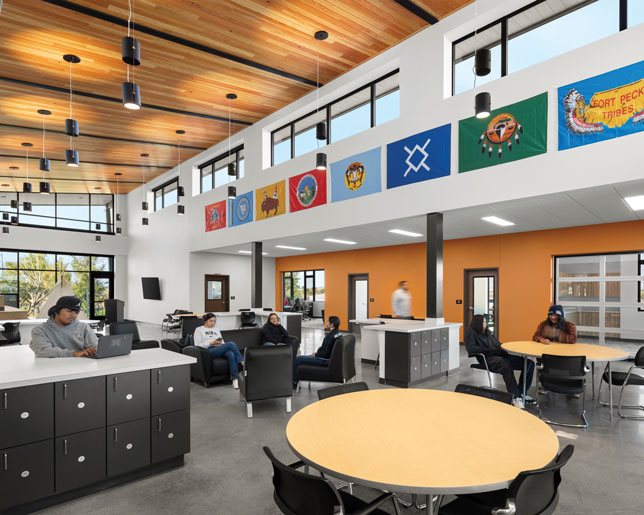
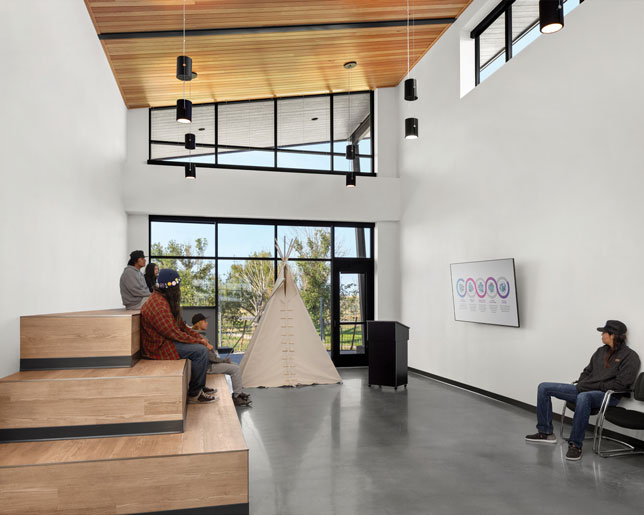
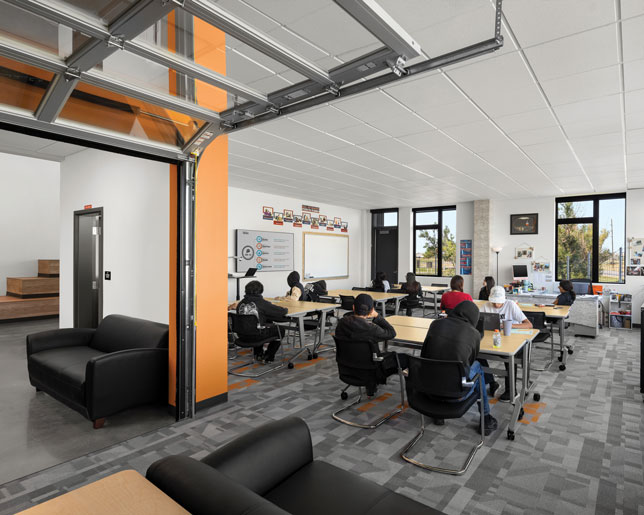
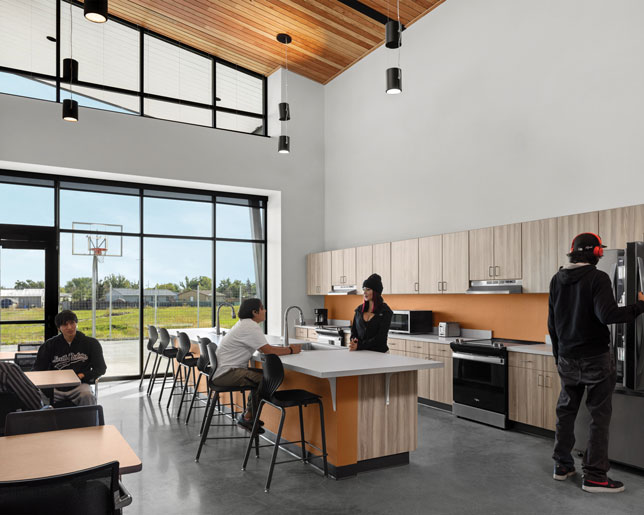
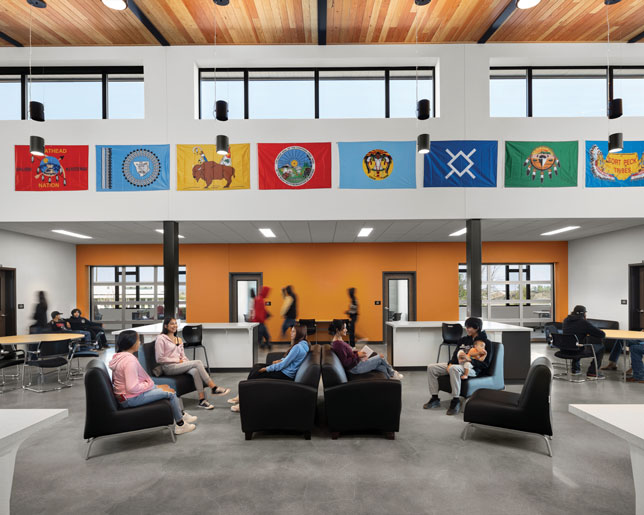
Organized around a large central family room, the building embodies a non-traditional high school model that prioritizes flexibility and individualized learning. Four learning centers surround this shared space, fostering interaction while maintaining a sense of belonging and appropriate scale. Adjacent program elements, which include a student kitchen, presentation area, and small-group rooms, support a wide range of learning styles, from collaborative activities to focused, one-on-one engagement.
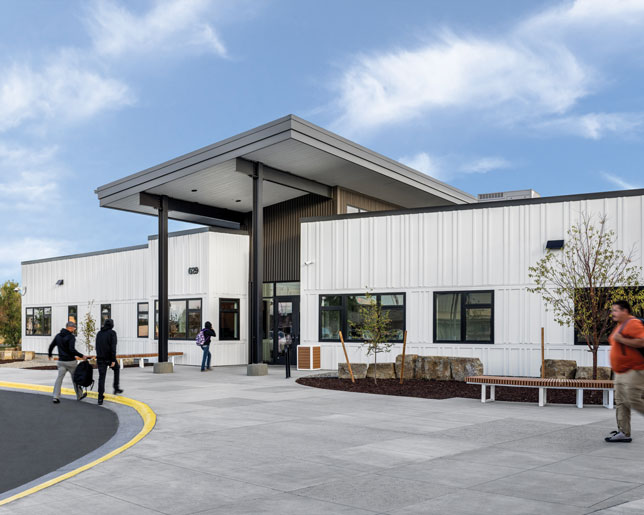
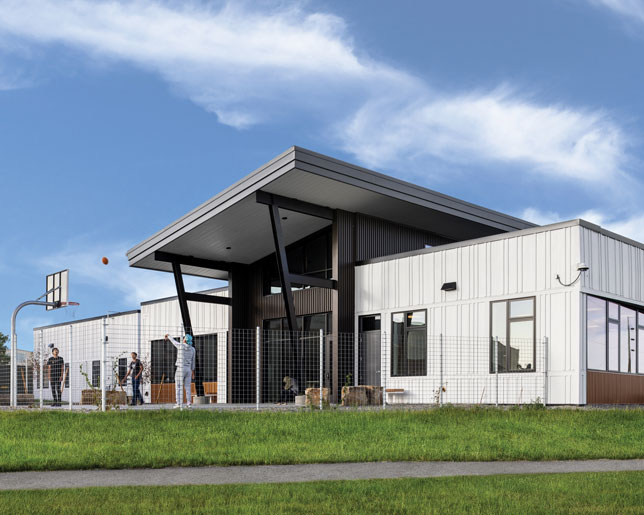
A shed roof defines the central collaboration area and extends outward to connect covered exterior spaces, reinforcing indoor–outdoor learning opportunities. Generous ribbon windows in the learning centers bring abundant natural light into the building while framing expansive views of the surrounding plains, grounding the experience in the Hardin landscape.
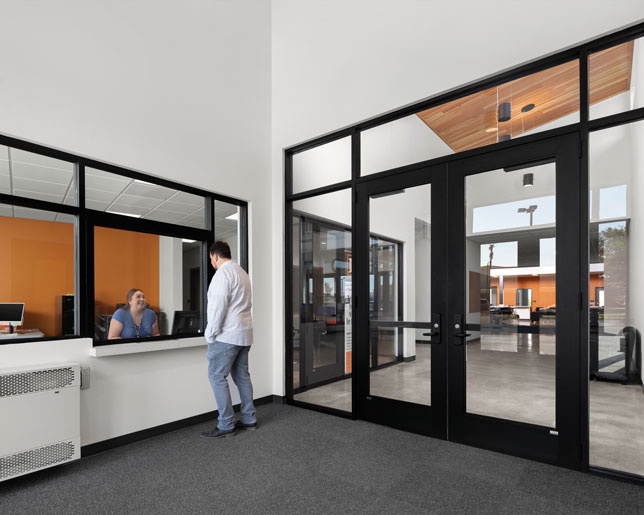
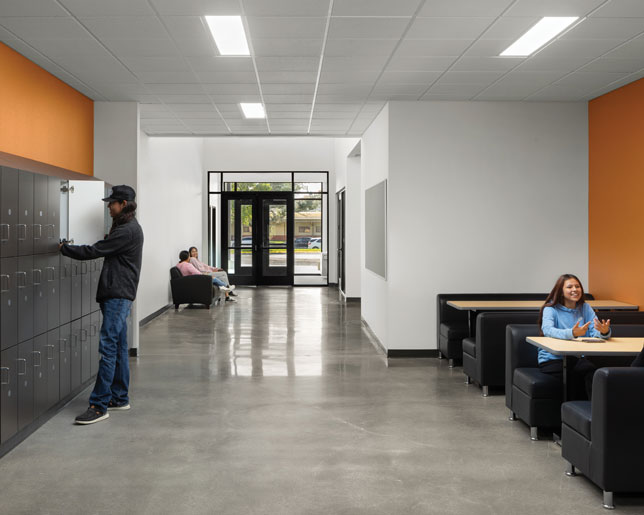
The exterior expression reflects the organization and values of the interior. A double-height entry clearly marks the building’s arrival point and leads into a secure vestibule, balancing openness with safety. Durable, cost-effective white fiber cement cladding was selected both for longevity and symbolism, representing purity and peace in recognition of local Native American culture. The design team engaged in a thoughtful research and engagement process, meeting with stakeholders and tribal representatives to inform culturally respectful decisions, including orienting windows and entries to the cardinal directions in alignment with tribal beliefs.
Grounded in research on trauma-informed educational environments, the design was developed in close collaboration with school administrators, counselors, and wellness providers. The guiding design hypothesis centered on the belief that integrating academic, administrative, and health services within a single, student-centered facility would strengthen engagement, improve access to care, and foster a greater sense of community and trust.
This intentional integration enables the facility to meet students where they are, supporting academic growth alongside emotional and physical well-being. An on-site health clinic, accessible to both students and the broader community, reinforces a holistic vision of education that recognizes the essential connection between well-being and long-term student success.
Long-term performance and sustainability were also integral to the project. A thickened slab addresses site and construction coordination challenges while providing added thermal mass to enhance energy efficiency and indoor comfort. The building was also designed with future solar installation in mind; while funding was not available during construction, the shed roof over the family room is structurally prepared to accommodate solar panels when resources allow.
Today, Big Horn Academy offers a welcoming, safe, and dignified environment that supports academic growth, personal development, and overall well-being, reflecting the district’s commitment to student-centered education and community partnership.
Architect(s):
Cushing Terrell