 Richard A. Balderston OPC’69 Lower School
 Richard A. Balderston OPC’69 Lower School
 Richard A. Balderston OPC’69 Lower School
 Richard A. Balderston OPC’69 Lower School
 Richard A. Balderston OPC’69 Lower School
 Richard A. Balderston OPC’69 Lower School
 Richard A. Balderston OPC’69 Lower School
 Richard A. Balderston OPC’69 Lower School
 Richard A. Balderston OPC’69 Lower School
 Richard A. Balderston OPC’69 Lower School
Project Information
Facility Use: K-12 Institution
Project Type: New Construction
Category: Whole Building / Campus Design
Location: Pennsylvania
District/Inst.: William Penn Charter School
Chief Administrator: Thu-Nga Morris, Director of Lower School
Completion Date: 09/01/2025
Gross Area: 78,000 sq. ft
Area Per Student: 250 sq. ft
Site Size: 3 acres
Current Enrollment: 315
Capacity: 350
Cost per Student: n/a
Cost per Sq. Ft.: $717
Total Cost: $56,000,000
Completed in September 2025, the Richard A. Balderston OPC ’69 Lower School is the culminating project in William Penn Charter School’s multi-phase campus transformation and a built expression of the school’s mission and values. As the nation’s oldest Quaker school, Penn Charter sought more than a new academic building for its youngest students. The goal was to unite Pre-K through Grade 5 under one roof, strengthen daily community, and create an environment where educational philosophy, campus identity, and stewardship of the natural world are inseparable. The resulting 78,000-square-foot, two-story building establishes a shared academic home that is warm, inclusive, and deeply connected to place.
Educational Vision and Guiding Principles
The project is guided by three interwoven ideas: Quaker values, the school’s Reggio Emilia-inspired pedagogy, and the character of the Penn Charter campus and surrounding landscape. Principles of community, stewardship, equality, and simplicity shaped decisions at every level. The two-story scale creates an approachable environment for young children while reinforcing a close-knit academic village.
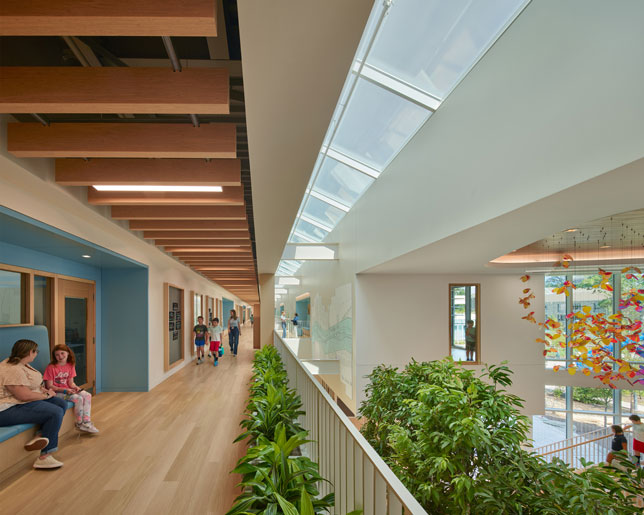
The concept of “inner light,” central to Quaker thought, is expressed through a linear skylight running the length of the building’s central spine, bringing daylight deep into the plan and creating a luminous organizing element.
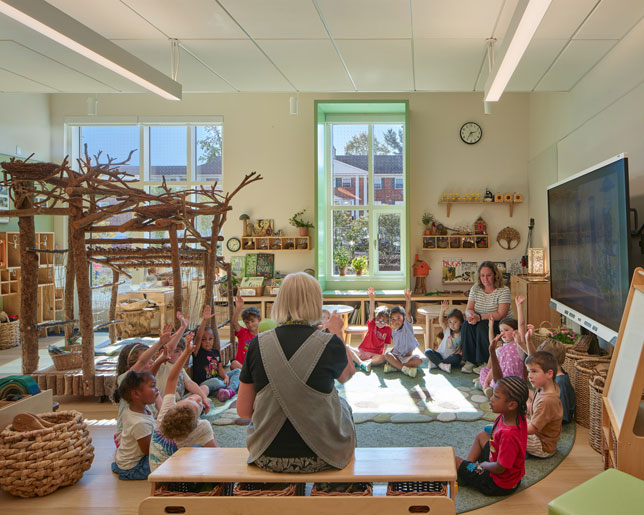
Aligned with the school’s philosophy of the environment as the “third teacher,” the design moves beyond isolated classrooms to create a network of interconnected learning spaces. Classrooms are flexible and daylit, while shared areas, breakout zones, and informal gathering spaces support curiosity, collaboration, and independence. The result balances structure with openness, allowing the environment to evolve alongside teaching methods.
Planning Process and Community Engagement
The planning process was collaborative and rooted in the life of the school community. Leadership, educators, parents, students, alumni, and neighbors contributed through an extensive engagement process from early planning through construction.
This input shaped both educational priorities and the building’s character, ensuring the Lower School would feel welcoming, support young learners’ development, strengthen connections across grade levels, and embody Penn Charter’s mission. The final design reflects a shared institutional vision translated into architecture.
Site Strategy and Campus Integration
Located on approximately three acres at the southwest corner of campus, the Lower School replaces an aging field house and related infrastructure with a purpose-built educational environment. Its placement creates a protected home for younger students while integrating with the broader campus.
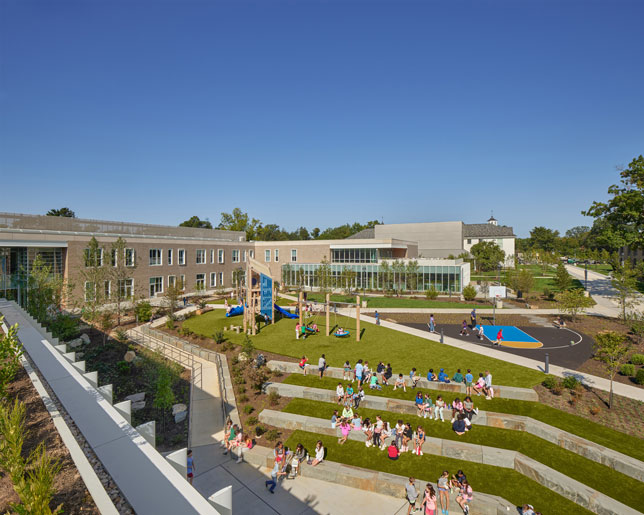
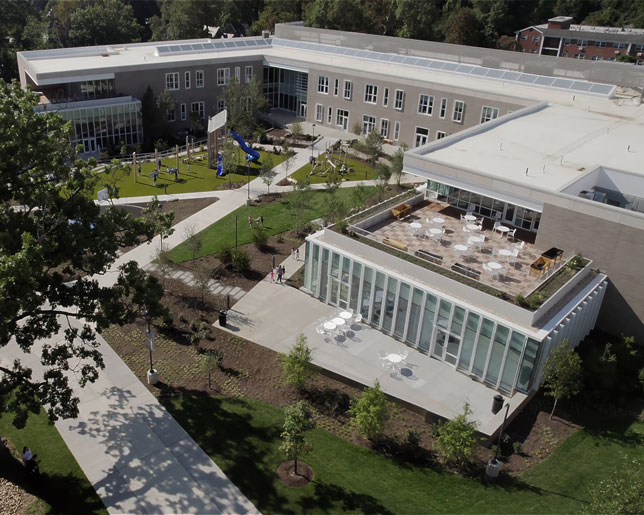
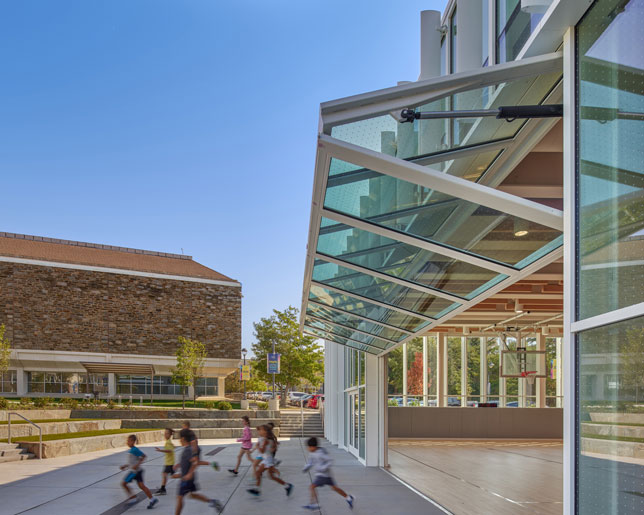
A U-shaped plan frames a central courtyard, which serves as the social and spatial heart of the school. This courtyard functions as an outdoor classroom, play space, and gathering area, strengthening connections between indoor and outdoor learning while supporting daily school life.
Architectural Concept and Learning Environment
The architectural concept draws inspiration from the nearby Wissahickon Valley Park and watershed. The building’s linear, meandering form reflects the experience of moving through the river valley, while layered materials evoke geological stratification and the layered nature of learning.
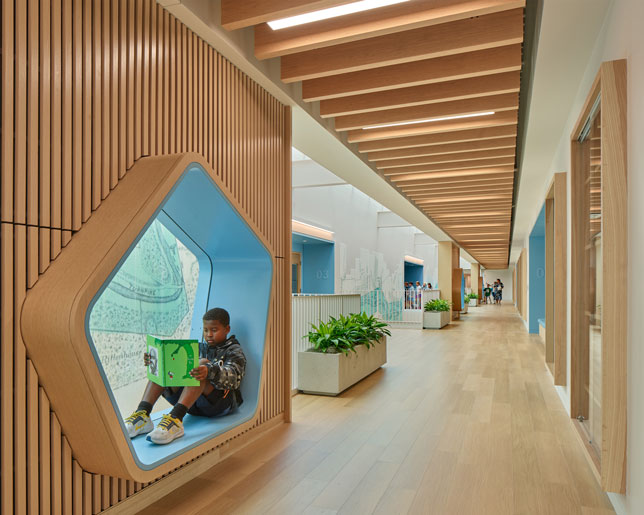
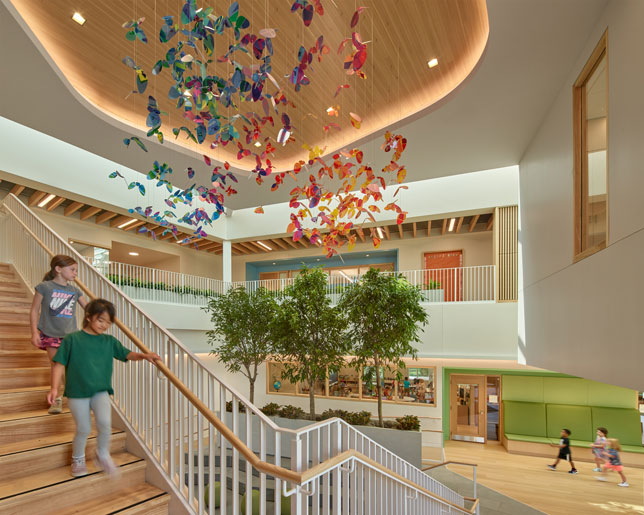
Inside, offset corridors, bridges, and visual connections between floors create dynamic spatial relationships. These elements enliven the space, allowing students to see and sense one another throughout the day and reinforcing a sense of community.
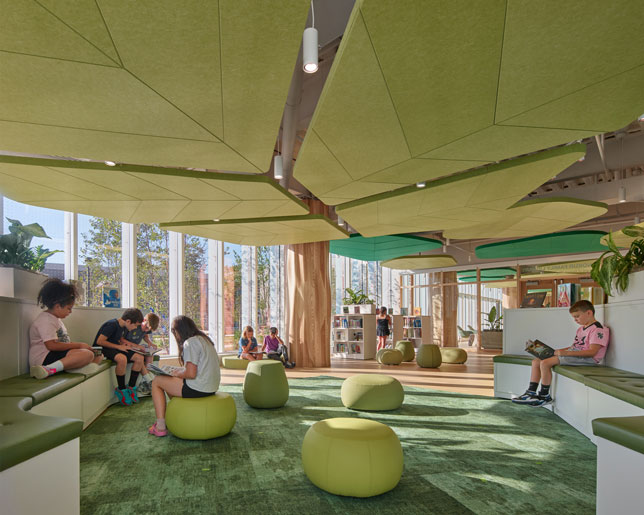
The program balances individual and collective experiences. Classrooms provide consistency and flexibility, while shared spaces encourage cross-grade interaction. At each end of the building, glass-enclosed volumes house the library and activity room, serving as complementary anchors for reflection and active engagement.
School Identity and Student Engagement
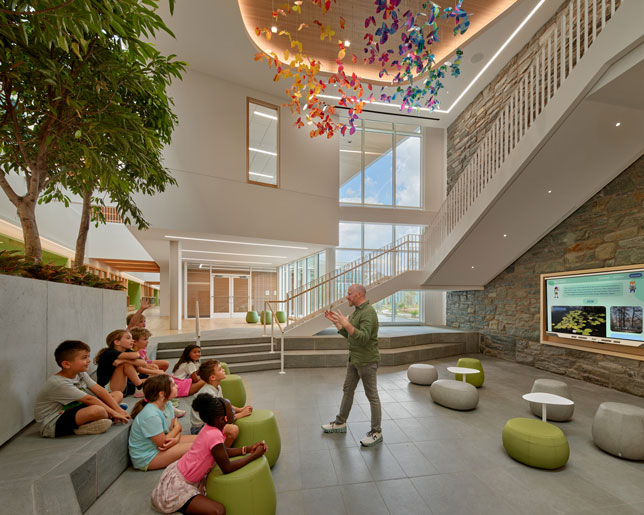
Interior spaces such as Friendship Hall, the Founders Entry, and the Link support gathering, transition, and celebration. These areas create moments of pause and interaction that extend beyond classroom learning.
Environmental graphics and installations reinforce school identity and values. A former all-school mural has been reinterpreted as suspended butterfly installations that symbolize growth and continuity. Additional graphic elements highlight themes of language, community, and the natural world, making the building itself a teaching tool.
Outdoor Learning and Play
A defining strength of the project is the integration of indoor and outdoor learning. The central courtyard includes natural play areas, a reading terrace, a basketball court, a mud kitchen, an amphitheater, and a student-operated “busy river” that encourages interaction with water and landscape.
A smaller, sheltered outdoor space serves younger students directly, while roof terraces extend opportunities for learning and play. Over time, the grounds will evolve into a “learning forest,” deepening students’ connection to ecology, seasonality, and stewardship.
Safety, Security, and Accessibility
Safety and accessibility are embedded in the design. The U-shaped plan creates a secure environment, with the courtyard functioning as a protected outdoor center. Clear circulation paths and strong sightlines support intuitive wayfinding and supervision.
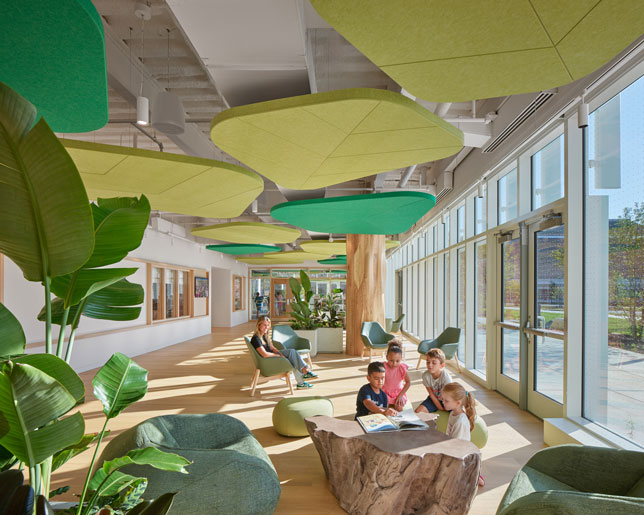
The building maintains openness while providing an appropriate scale for young children. Elevators, ramps, and inclusive circulation ensure accessibility for all users. Acoustic treatments further support a calm learning environment by managing noise in shared spaces.
Materials and Interior Environment
Material selection balances context, durability, wellness, and long-term value. The exterior combines campus-compatible brick with Wissahickon schist, grounding the building in both architectural and geological context. A high-performance masonry rainscreen enhances durability and thermal performance.
Inside, materials create a warm, nature-inspired environment while meeting the demands of an elementary school. Low-VOC finishes, recycled content, and FSC-certified wood support indoor environmental quality and responsible sourcing, while detailing maintains a sense of softness appropriate for young learners.
Sustainability and Building Performance
Designed to achieve LEED Silver Certification for Schools, the project integrates passive and active sustainability strategies. Shading devices reduce glare and heat gain while preserving daylight and views. High-performance glazing includes bird-safe frit patterns aligned with Audubon guidance. The building is also designed to support future photovoltaic installation.
The landscape plays a critical role in environmental performance. Preserved trees and 246 new plantings establish a framework for the future “learning forest.” Stormwater systems manage runoff while supporting educational opportunities.
The “busy river” exemplifies this approach, connecting a student-operated pump to a rainwater cistern and channeling water to a rain garden. This transforms infrastructure into a hands-on learning experience, making ecological systems visible and engaging for students.
Cost-Effectiveness and Long-Term Value
The project prioritizes long-term value over short-term cost reduction. Standardized classroom planning allows for flexibility to meet future needs, while durable materials reduce lifecycle costs. High-performance systems and daylighting strategies improve operational efficiency.
Outdoor spaces are multifunctional, supporting recreation, learning, and social interaction. These decisions align performance, mission, and experience, creating lasting value for the school community.
Conclusion
The Lower School succeeds by uniting educational vision, architectural clarity, and environmental responsibility. It provides a setting designed around the scale and curiosity of young learners while expressing Penn Charter’s Quaker values through light, materiality, and landscape.
As both the culmination of a broader campus transformation and a foundation for future generations, the building demonstrates how educational architecture can embody mission, elevate daily experience, and foster belonging, wonder, and stewardship.
Architect(s):
EwingCole