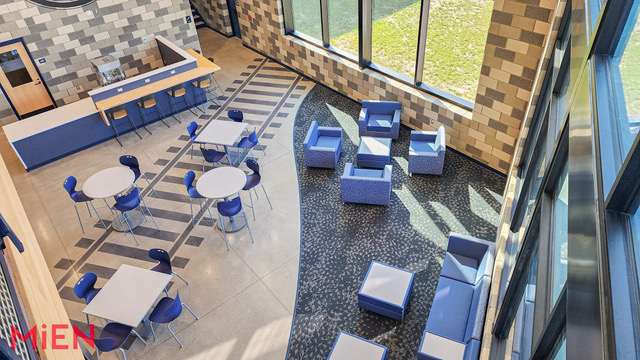
Designing and building a large-scale project on a K–12 campus is a monumental undertaking that requires the right blend of ideas, funding, design and execution to get it right. The process also relies on multiple partners, each of which has to handle its respective aspect of the project while also keeping the district’s broader mission and goals in mind.

Griffith STEAM Magnet Middle School's Agualta STEAM Engine blends education, community, and nature through its adaptable design.
MiEN Company recently released a new white paper called “Designing New Innovative Spaces for Community Colleges” to address the needs of community colleges post-pandemic, according to a news release. The eight-page guide by Dr. Christina Counts, MiEN Company VP of Education and Marketing, covers topics like the enrollment drop that these schools have seen since COVID-19, the roles they play in higher education and local workforces, and five suggested key changes that can improve students’ experiences.
Commercial furnishings manufacturer Kimball International recently premiered the fifth season of its Alternative Design podcast, according to a news release. The first episode was released on March 17, and new episodes will launch monthly. The podcast discusses forces that shape built environments, from work to housing to healthcare to human wellness.

On this episode of Schools in Focus, we'll talk about the role that classroom furniture plays in creating adaptive, flexible learning spaces. Our guest is Wesley Edmonds, the Director of Workplace, Adaptive Solutions at OFS.
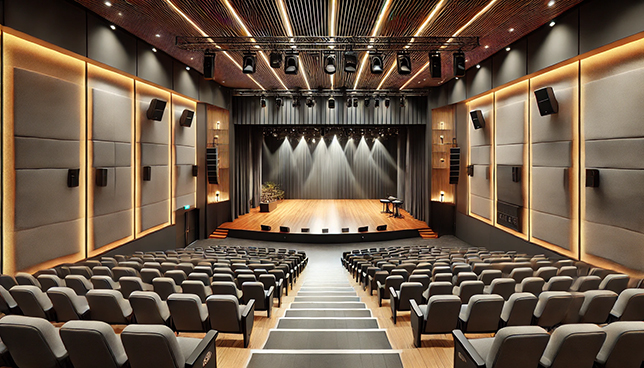
Designing a top-tier performing arts facility for a high school is a complex endeavor that demands a delicate balance between advanced technical specifications and practical budget considerations. Nevertheless, it represents a crucial initiative that enriches educational and community engagements.
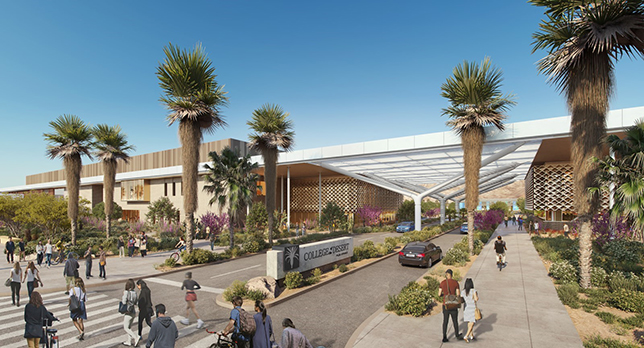
College of the Desert recently announced that it has broken ground on its new Palm Springs campus in Palm Springs, Calif., according to a news release. The multiple-building campus consists of 175,000 square feet of new construction and will cost an estimated $268 million.
White Bear Lake Area Schools in White Bear Lake, Minn., recently announced that it has completed the renovation and expansion of White Bear Lake Area High School, according to a news release. The school’s final addition, a new 845-seat Performing Arts Center, was finished in November.

One of the most fundamental human requirements, as outlined in Maslow’s hierarchy of needs, is the provision of basic needs: food, shelter, and clothing. In school, this hierarchy of needs shifts to include the need for physical, mental, and emotional safety. The student mind is not biologically wired to deal with the negative impacts of unsafe environments, which implies that security has a major impact on student well-being.
Today’s guest is Devin Bowman, General Manager of Technical Glass Products (TGP) and AD Systems. We’ll talk about the relationship between school architecture and designing for safety as design aspects like natural light and floor-to-ceiling windows become more common.
We all experience boredom at times. Not everything can be thrilling and engaging. However, this should not be the prevalent case for student learning in several classrooms. Over the past several years, data collected on student learning experiences often paint a dismal picture. Students are disengaged and bored. What can school leaders and architects do to combat this crisis in schools?
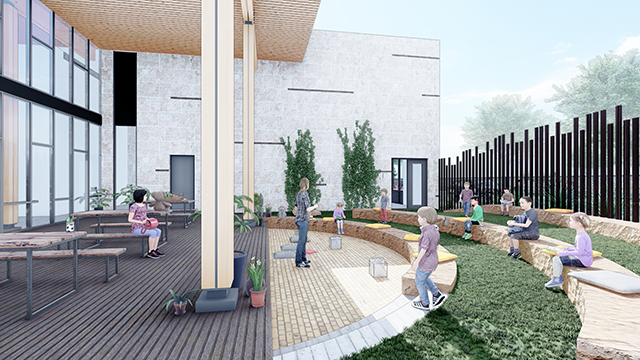
We've all heard it a million times. "Go outside and get some fresh air." Well, Mom was right, and not just about being bored on a summer afternoon. There’s solid research that shows taking the classroom outside can be a game-changer, especially when it is introduced early to our youngest learners.
Scion Advisory Services recently launched its new Strategic Housing Planning Service, a cost-effective and collaborative process that provides colleges and universities with a method to align its student-housing offerings with its institutional mission, according to a news release. The service takes into account the needs, hurdles, and possibilities across a full campus housing system, as opposed to the single residential facility that tends to be the focus of many feasibility or demand studies.
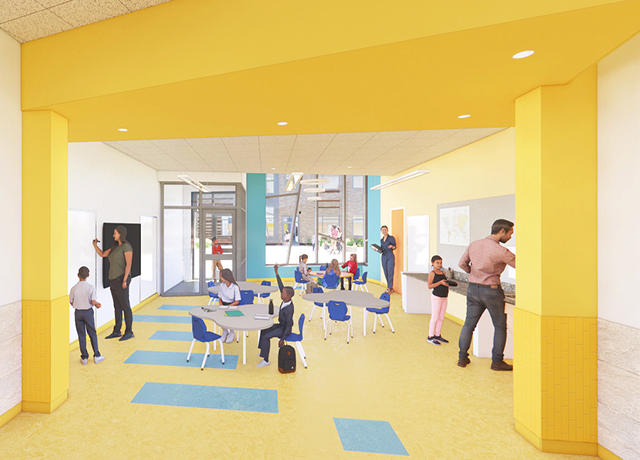
Approximately 15 percent of children in U.S. public schools receive special education support or services—with some states reporting numbers over 20 percent—and these figures are rapidly increasing. When considering English language learners, the numbers climb even higher. As school districts prioritize the inclusion of all learners, school design teams can support district initiatives by integrating Universal Design for Learning (UDL) into the fabric of educational environments.
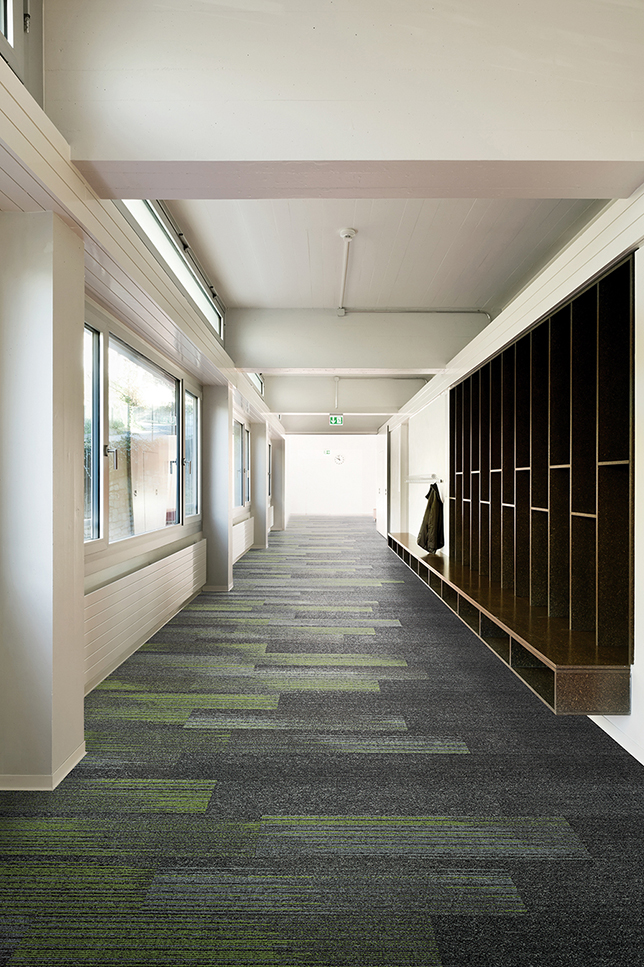
As design professionals, we know the impact our physical surroundings can have on occupants – open spaces can inspire a sense of grandiosity but create a lot of noise, certain colors feel calming while others build excitement, curved lines soften a space while straight lines add intensity. These are all well-known tenants of design, but only in the past few decades have we used science to support these claims.
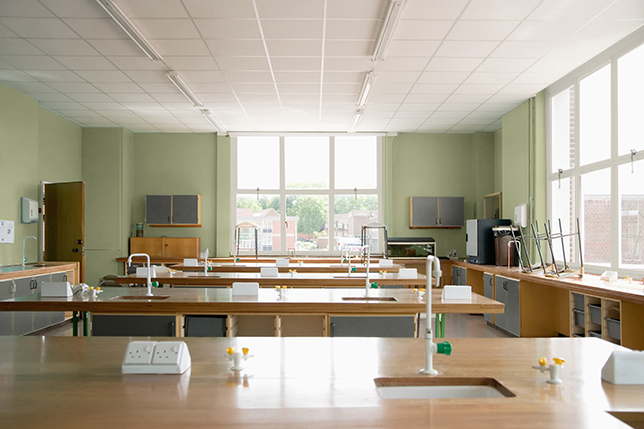
Color selection for classrooms must rely on evidence-based design and principles to enhance engagement and, more importantly, support both teachers and the students in the desired outcomes for their time within classrooms and learning spaces.
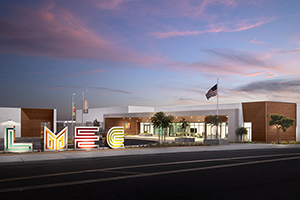
Established in 1999, the Education Design Showcase is a vehicle for showing off innovative — yet practical — solutions in planning, design, architecture, and construction. The Logan Memorial Educational Campus has been recognized with an EDS 2024 Grand Prize award in the category of New Construction.
Comprehensive K–12 learning environment solutions provider School Specialty recently launched its first-ever $50,000 School Makeover Sweepstakes, according to a news release. One grand-prize winner will receive a school makeover, while ten first-prize winners will get professional development packages worth up to $6,500.
Integrated design firm DLR Group recently announced that it will partner with Marist College to design a new campus-wide master plan for its campus in Poughkeepsie, N.Y., according to a news release. The plan will serve as a blueprint for the Marist 100 initiative, a strategic plan that aligns with the college’s centennial celebration in 2029.
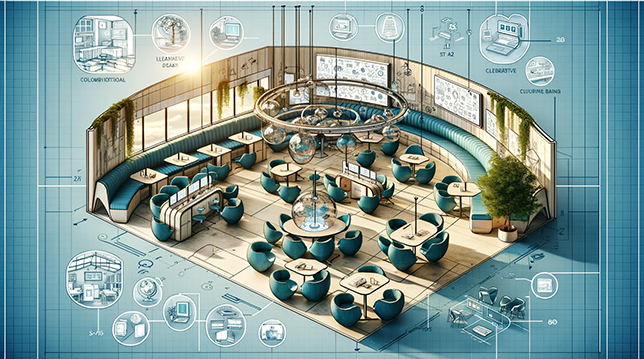
Spaces4Learning recently convened a panel of ed tech experts to discuss how technology and design can help create a better learning experience for all students — and how institutions can plan, design, and assess their own vision for the classroom of the future.
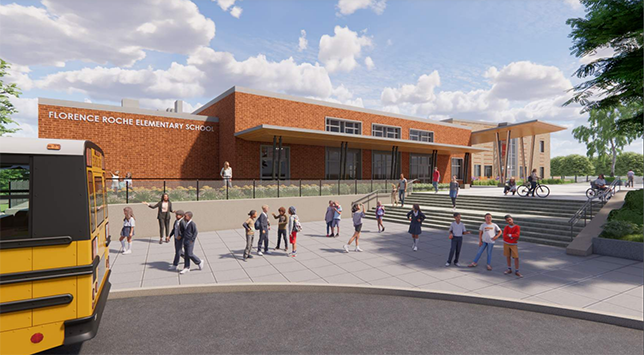
Studio G Architects recently announced that a new elementary school in Groton, Mass., has reached the final stage of construction. Florence Roche Elementary School (FRES) will cover about 110,000 square feet and was designed to embody the district’s educational pedagogy of Universal Design for Learning.
Franklin Cummings Tech, a private technical college in Boston, recently celebrated the groundbreaking of a new, 66,000-square-foot facility as its new campus, according to a news release. The college partnered with Studio G Architects and Studio ENEE for the facility’s design.
Here at Spaces4Learning, we recently launched a new resource on our website—the Glossary of School Facility Planning and Maintenance. It offers clear and concise definitions of key terms and concepts used in the planning, design, construction, and maintenance of K–12 and higher-education facilities.
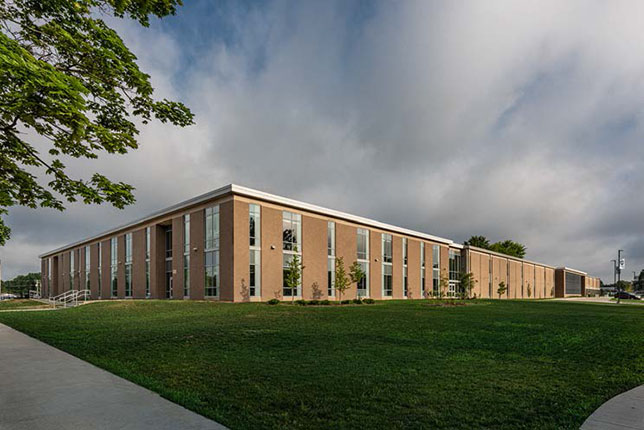
Following decades of advancements in teaching and learning, two public high schools in Champaign, Ill., were challenged to adapt their buildings to support future-ready education. Through renovation, addition, and reorganization by global architecture and design from Perkins&Will, the transformed Champaign Central and Centennial high schools—located four miles apart—are aligned with the community’s vision and designed to meet the evolving needs of contemporary education.

We asked our readership to send us their predictions for 2024 trends in educational facilities. Across K–12 and higher-education campuses both, we asked for opinions on topics like technology, flexible learning spaces, campus safety & security, disaster response, and more. This article is the third in a three-part series compiling responses from educational professionals and vendors.
We asked our readership to send us their predictions for 2024 trends in educational facilities. Across K–12 and higher-education campuses both, we asked for opinions on topics like technology, flexible learning spaces, campus safety & security, disaster response, and more. This article is the first in a three-part series compiling responses from educational professionals and vendors.
The Gavilan Joint Community College District recently announced the topping out of Phase 1 of a new campus in Hollister, Calif., according to a news release. Gavilan gathered with representatives from partners Blach Construction, Quattrocchi Kwok Architects (QKA), and Gensler to celebrate the ceremonial placement of the final steel beam in the building’s structure.
Spaces4Learning is now accepting entries for the 2024 Education Design Showcase! The program was established in 1999 to share innovative and practical solutions in planning, design, and construction.
We’re inviting our readership—administrators, facilities managers, architects, engineers, builders, superintendents, designers, vendors—to chip in on their predictions for educational facilities in 2024.
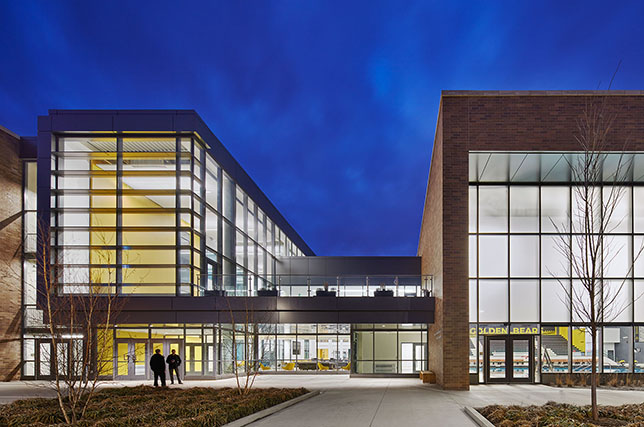
“Your voice matters” defined the Upper Arlington, Ohio, High School master planning and design process, and it was the catalyst behind the project to improve aging facilities in this high-performing district.