Long-term planning in the K-12 realm can be a source of great debate amongst teachers, administrators, and staff in a school district. Coming to a consensus as to what is important and what can wait is critical in the maintenance of a smoothly run district. Todd Spore, partner at PBK Architects, has long dealt with K-12 master planning. He sat down with School Planning & Management to answer a few questions about the topic.
Colleges and universities are centers of learning and recreation. These activities are year-round, and in most cases, campuses are constantly bustling with activity—even in the summer time. When it comes to constructing or renovating campus spaces, making sure students have spaces in which to learn can be tricky, with buildings closing for work to be performed. Gwen Gilley, AIA, LEED-AP BD+C, principal, Hord Coplan Macht, has seen this scenario play out several times, and explains some of the strategies her firm has employed to help make the construction phase easier on students, faculty, and staff.
Getting students ready for college and ready for careers is becoming ever more important in all levels of K12 education. The ideas of collaboration, and hands-on learning, also known as “next-generation learning is also impacting how schools are designed. Steven Herr, AIA, is director of Design for Fanning Howey, an architecture and engineering firm specializing in learning environments, and is quite familiar with some of the ideas and challenges presented by next-generation learning. School Planning & Management asked Stephen a few questions on the subject.
College and university libraries are important campus spaces—places for students to study, reflect, and gather research materials. Jeffrey Sronkoski, principal and director–Higher Education practice for Legat Architects, knows all about these spaces, as he has helped Legat advance their expertise in academic libraries in higher education. College Planning & Management asked some questions about designing libraries that also function as a versatile academic space; something Jeffrey is quite familiar with.
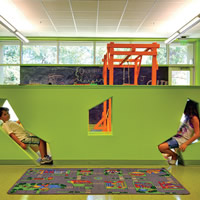
Designing for special needs in k-12 schools.
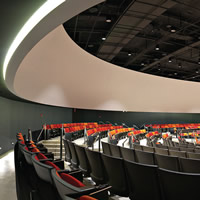
The bionic classroom is here. Packed with technology, reconfigurable on a moment's notice and ready to foster innovation, these spaces help forward-thinking instructors educate next-generation students. College Planning & Management profiles five new spaces that push the edges.
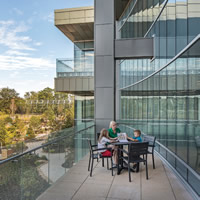
Kids are inherently curious creatures who learn by observing and interacting with their surroundings. They are intrinsically drawn to animals, watching carefully as animals play, relate, and move throughout nature. When a child’s educational experience includes daily interaction with animals, learning is elevated.
Here is one school safety issue that we can address.
If an emergency occurs, we need a comprehensive plan that includes everyone.
Facing enrollment pressures, colleges and universities will look to facilities for cost savings in 2018.
Designing collaborative and flexible learning spaces is critical in today’s schools. Kimberly Bannigan, learning information systems coordinator at DeForest Area School District in DeForest, Wisc., knows this well. Bannigan participated in the process of designing a library in the district that promoted collaborative and flexible learning—and we spoke about the process, and other elements involved in creating a versatile learning space.
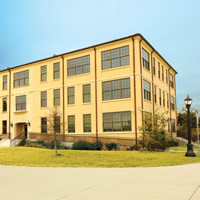
Preserving the past, embracing the future