
We asked our readership to send us their predictions for 2024 trends in educational facilities. Across K–12 and higher-education campuses both, we asked for opinions on topics like technology, flexible learning spaces, campus safety & security, disaster response, and more. This article is the second in a three-part series compiling responses from educational professionals and vendors.
We asked our readership to send us their predictions for 2024 trends in educational facilities. Across K–12 and higher-education campuses both, we asked for opinions on topics like technology, flexible learning spaces, campus safety & security, disaster response, and more. This article is the first in a three-part series compiling responses from educational professionals and vendors.
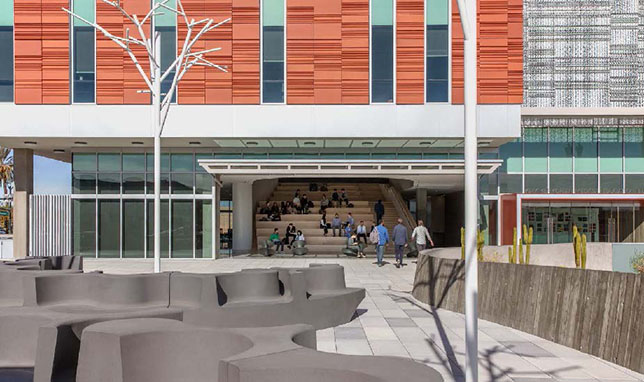
The Kirk Kerkorian Medical Education Building (MEB) is the flagship facility for the Kirk Kerkorian School of Medicine at UNLV and serves as an anchor for future expansion within the city s burgeoning medical district. With a diverse program that supports learning and collaboration at many scales, the new facility—the med school’s first permanent structure—allows the school to double its graduating class from 60 to 120 students and help address a shortage of healthcare professionals in the state.
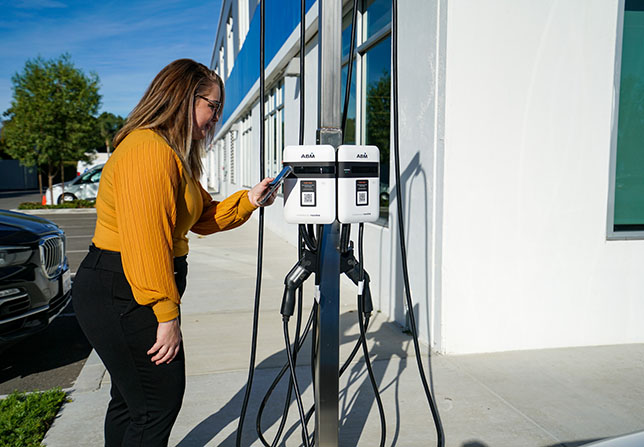
The Electric Vehicle (EV) revolution is upon us. A recent analysis by EY found that EV sales will outpace all other engines three years sooner than expected. This demand will be further driven by the Inflation Reduction Act with new incentives to encourage domestic EV production and ownership. Campuses need to be ready with convenient access to fast and reliable charging stations to support students, staff, guests, and electrified fleets.
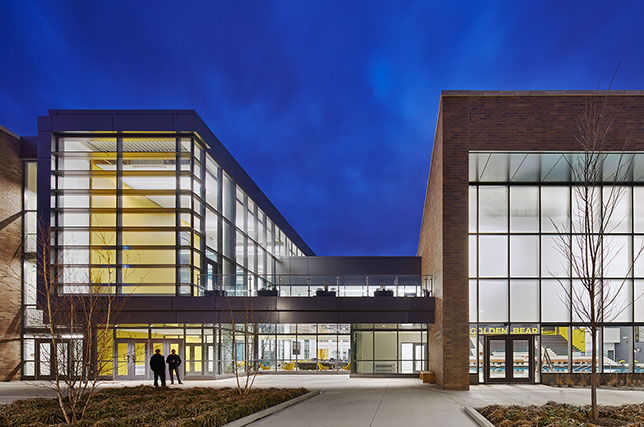
“Your voice matters” defined the Upper Arlington, Ohio, High School master planning and design process, and it was the catalyst behind the project to improve aging facilities in this high-performing district.
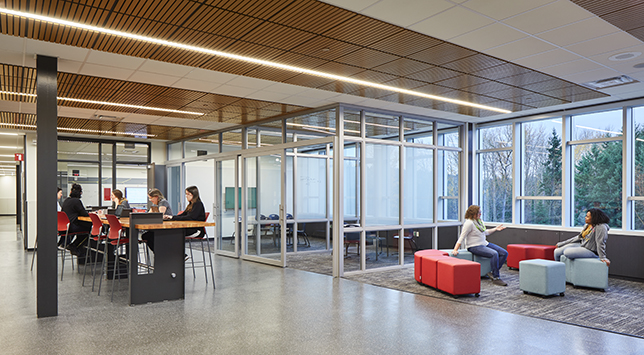
While these design goals sought to balance the various needs of a school, they also supported social-emotional learning (SEL), which focuses on fostering social and emotional skills within school curricula. SEL can take many forms, but it generally adheres to five central competencies: self-awareness, self-management, social awareness, relationship skills and responsible decision-making.
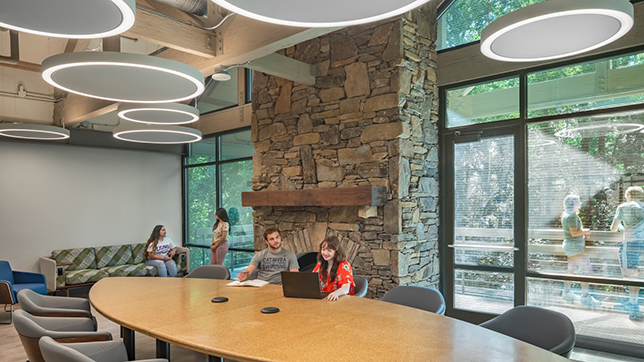
At Catawba College, home of the first certified net-zero campus in the Southeast and only the seventh in the United States, the Center for the Environment (CENV) features the Environmental Studies Department’s hands-on research laboratory. Built more than 25 years ago, the building needed major systems and aesthetics revitalization.
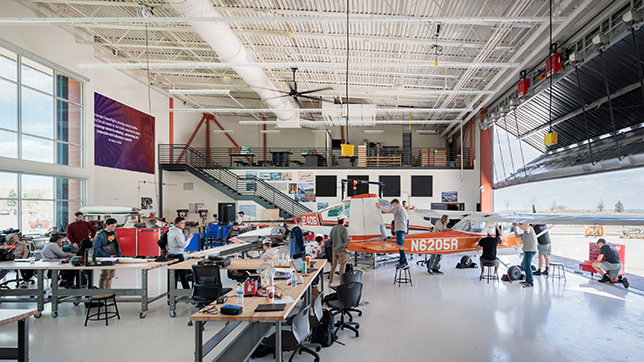
Creating successful spaces to spark curiosity, collaboration and confidence for students starts with several key programming and design considerations.
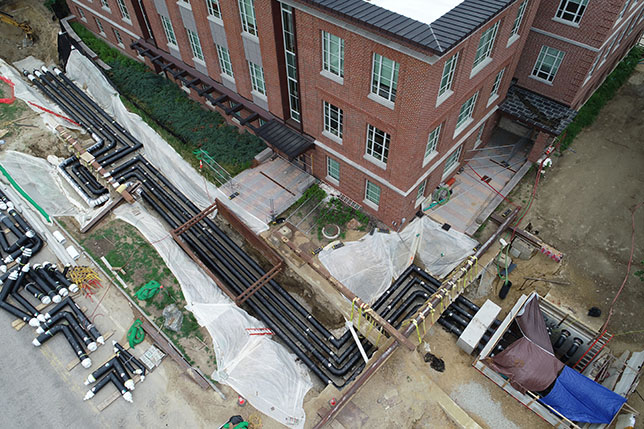
This strategy for campus renewal and modernization was top of mind for the University of New Hampshire (UNH) as it embarked on one of its most significant infrastructure improvements in recent history––relocating a substantial portion of its utility distribution network connected to the Combined Heat & Power Plant (CHP).
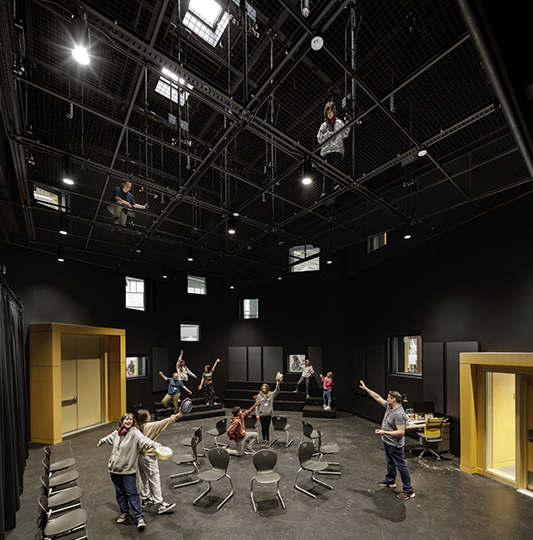
Getting a student out from behind a desk; having them work with others in a self-directed way; allowing them to explore and express themselves and make things; having them learn skills that can be applied in life and in possible career paths—those are goals behind today’s push to change how students learn, to get them to want to come to school every day. Education in the theatrical and performing arts promises much of these.
Construction activity on university campuses in America is more than noteworthy. In fact, it is being categorized as transformative! Due to a massive increase in students after COVID-19, a construction trend is sweeping college and university campuses in response to the high demand for more housing.
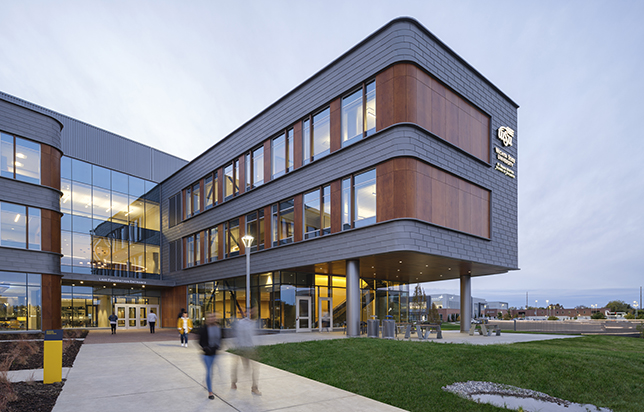
Home of The Barton School of Business, Woolsey Hall at Wichita State University (WSU) bridges the traditional academic campus with a newer complex of makerspaces, labs, and research facilities.
Today’s higher education institutions are faced with a myriad of operational complexities in the pursuit of academic excellence. Staffing, student well-being, maintenance, sustainability, and operations management challenges have only been amplified by the pandemic, decreasing enrollments, aging infrastructure, and funding constraints. The operating environment of educational facilities has undoubtably become more stressful.
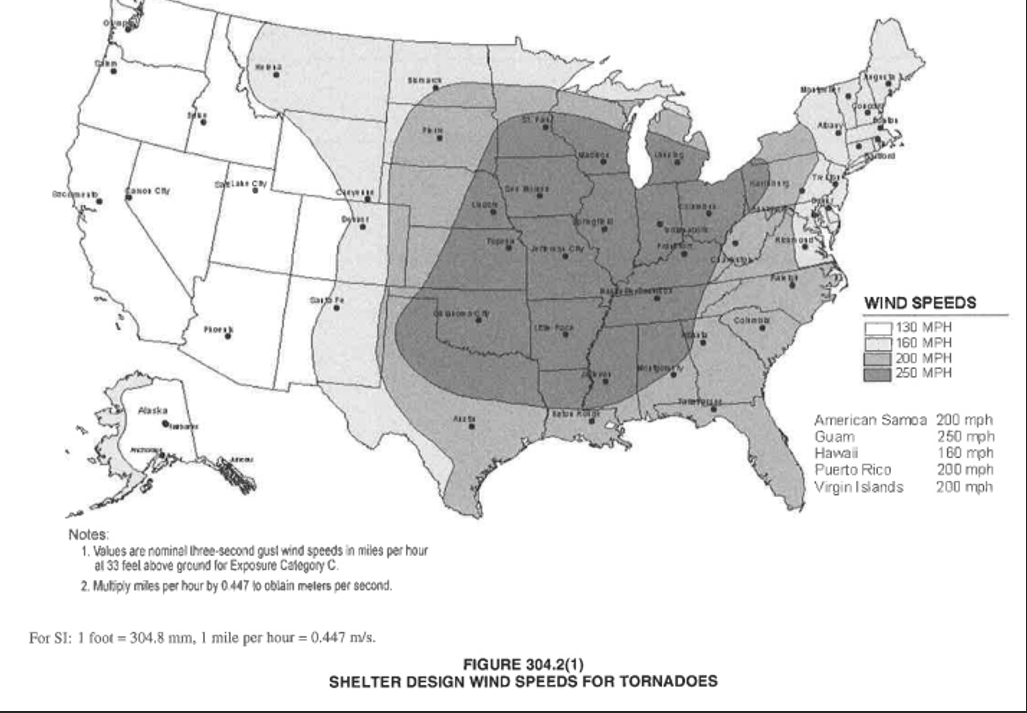
Reliable storm shelters must include the engineering necessary to ensure safety, comply with required guidelines and create comfort during emergencies.
Today’s K–12 leaders are tasked with everything from adhering to rigorous academic standards to implementing operational procedures to building healthy school communities, and for many, sustainability unintentionally falls to the bottom of the priority list. Further, the cost of taking on green initiatives is on the rise, making it even more of a challenge for financially strapped school districts to meet sustainability expectations and commitments.
Summer is flying by, which means a new school year is around the corner. As students begin to fill the hallways, so does an inevitable influx of germs and illnesses. A successful school year starts with creating a safe and healthy environment to welcome students back. Prepare your building for a new school year with these hygiene and cleaning recommendations.
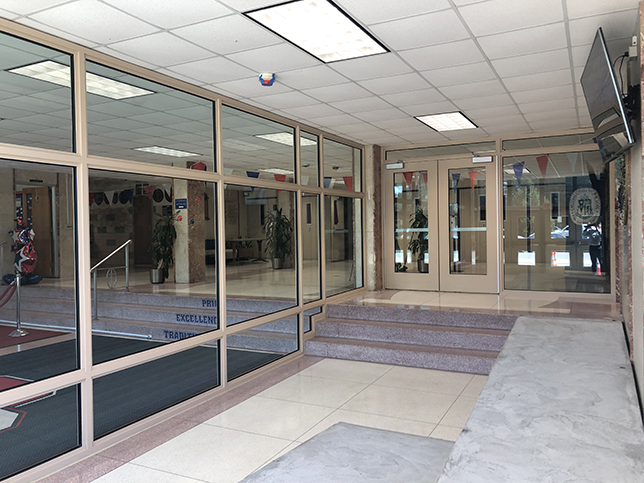
Ballistically protecting a school can be a daunting and complicated task. Focusing on practical best practices streamlines the process and makes your efforts more effective.
With the start of a new school year, the health & wellness of students, teachers, and school district employees has become—more than ever—a top priority and concern.
NC State University One Card offices face tough challenges trying to serve tens of thousands of students, faculty and staff. Every person needs an ID card to access various aspects of campus life, from entering residence halls and other buildings to linking to debit accounts and proving student status to participate in university activities. One Card office challenges include improving printer efficiency, reducing card waste, and eliminating the hassles of having to visit one central location to pick up cards.
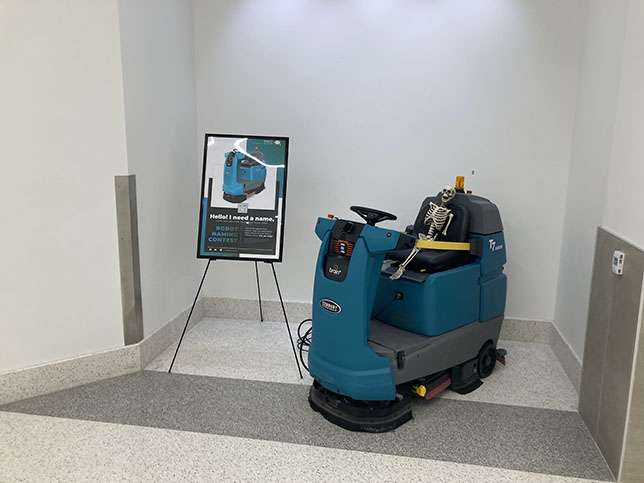
Autonomous Mobile Robots (AMR) are the future; Isaac Asimov and the rest of classic sci-fi have been telling us this for decades.
How can audio from intercoms and IP speakers play a role with perimeter security?