
Managing wireless tenants on school properties.
How much do we value the education and future of our children?

Providing students with the tools to become global leaders.
A MakersLab is a great way to help schools adapt and offer the types of tools students need to thrive in a 21st Century Classroom.
What if the school itself were a powerful learning tool, capable of creating the kind of positive, secure and engaging atmosphere children need to succeed?
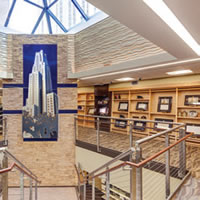
Renovation creates a destination at the University of Pittsburgh.
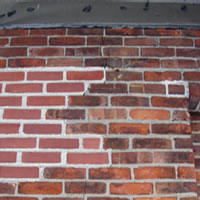
Adaptive reuse can revitalize aging building stock and can be advantageous both economically and environmentally. Here's how.
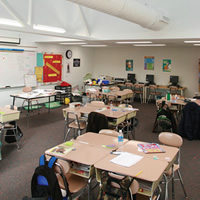
Resolving expansion problems by converting existing buildings into schools.
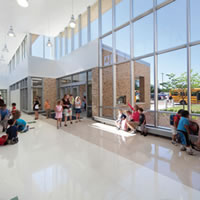
Early learning experts offer insights for classroom design, illustrated by an Illinois-based example.
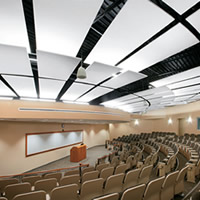
Acoustics impact student learning. Plans for physical spaces — walls, ceilings, flooring and more — made with good acoustics in mind at design and construction phases will result in high-performance, effective facilities.
There are five must-do safety tips for communities and schools to consider when they are upgrading and building new systems.
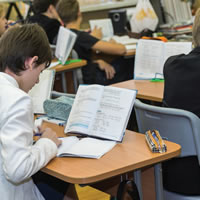
Study shows that sitting still does not equal paying attention.
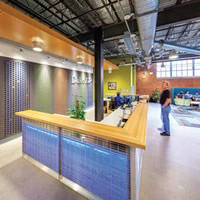
An increasing number of options in materials, furnishings and finishes is leading to vibrant, inviting design.
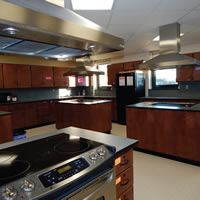
"Next-Generation Learning" is having a significant affect on interior design.
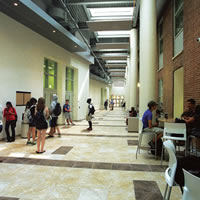
Colleges and universities that don't have historic identities to direct interior design choices can still develop and furnish modern, desirable interior spaces where students want to study, be and stay.
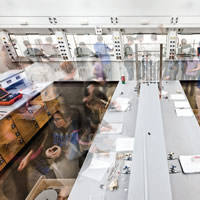
Selecting the right materials in order to deliver a safe, efficient and technology-laden facility that can adapt to changing research directions can be a daunting task.
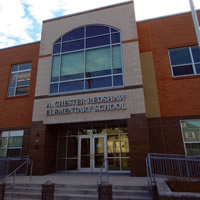
Providing high-quality, comfortable learning environments.
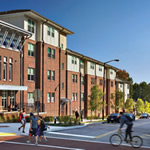
Cost savings, aesthetic value and speed of construction make wood a material of choice for campus construction.