Unless your district is a one-room schoolhouse, every capital improvement brings a corresponding disparity.
Avoid maintenance nightmares by claiming a spot at the design table.
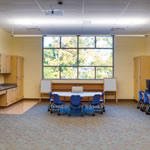
School design that gets inside a student's head research has begun to quantify the effect of interior school design on the performance of students.
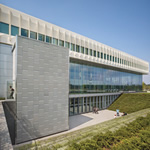
Basements and underground real estate are evolving from mechanical rooms and storage zones to fully functional, vibrant campus spaces.
It may be wiser to find ways to use the empty space for the community.

Adaptive technologies help students with disabilities fully engage in campus life.
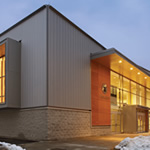
Today's options for building exteriors vary widely from traditional brick. An expanded palette of materials offers vivid color and texture choices to architects and designers.
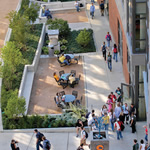
Integrating Crime prevention through Environmental Design (CPTED) concepts into master planning and design is one demonstrated way to create an overall safe campus.

Basic approach looks like natural surveillance.
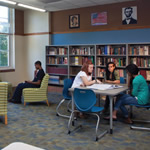
Three strategies are essential when creating successful classrooms and collaborative spaces.

In just over a decade, Nashville's Belmont University has undergone measured and successful change and growth.
At the start of each New Year, many people consider turning over a new leaf and trying to live differently. The world of education is no different, as the New Year can only mean one thing: changes are on the horizon.
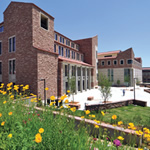
Healthy, sustainable grounds can greatly impact the overall quality of campus life for everyone. The best ways to create such a landscape however are as varied as the plants that inhabit them.
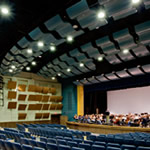
Designing a large school theater in New York City may include different considerations than a tiny theater for a rural community school. Yet, in each case there are similarities that are common to any good theater design.
Quality schools need funding to be properly planned and built to the highest standards. Selling the value of this funding can be easy

The forgotten component of the educational experience.
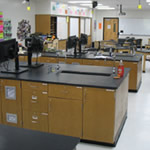
Creating learning spaces for a stem environment.
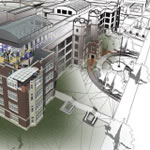
Building information modeling (BIM) enables architects and builders to collaborate and improve efficiency, quality and cost performance.
Nobody thinks of parking, until they need it. Then it's a chore. Technology promises to make finding and paying for a space easier, and might even convince drivers to take the bus.

Making long-existing structures technologically up-to-date is a challenge, but it can be done.
The time has come to examine development partnerships as an opportunity to move forward as the deep recession eases.